
What Is the Significance of Heritage?
Why the Past Is More Than the Things We Decide to Preserve
Heritage is one of those words that becomes more difficult the longer you look at it. A castle is heritage. A cathedral is heritage. Stonehenge is unquestionably heritage, having survived several thousand years and acquired both a gift shop and a car park, which are usually reliable indications that Britain has decided something is important.
The difficulty begins further down the road. Is the abandoned textile mill heritage? The Victorian terrace? The old cinema currently occupied by a discount shop? What about the pub where three generations of the same family drank, despite having contributed nothing whatsoever to constitutional history?
We tend to recognise heritage most easily when it is impressive. Kings help, battles help enormously, and Roman involvement is almost always useful. The discovery that somebody sufficiently famous once slept in a building can apparently increase its historical importance overnight. A ruined castle sitting dramatically above a valley scarcely needs to argue for preservation because it looks historical. It has battlements. The ordinary past has a harder time making its case.
An old factory can remain merely an old factory until somebody announces plans to demolish it. A row of workers' houses can spend a century being regarded as unremarkable and then, shortly before the bulldozers arrive, become an irreplaceable example of nineteenth-century social history. The cinema where thousands of people spent Saturday evenings becomes valuable approximately six weeks after it closes. We possess an extraordinary ability to discover affection for places at exactly the point when somebody proposes knocking them down.
Perhaps this happens because heritage is not simply age. It is the accumulation of meaning. An object can be ancient without mattering particularly to us, while something considerably younger can become culturally important within a generation. Buildings acquire associations, landscapes accumulate stories and objects pass between people. A place can become significant because something happened there, but sometimes what happened was simply that people lived there.
History is often taught through events because events are convenient. A king dies, a battle happens, a government falls, and the date can be placed neatly beside it. Ordinary life does not behave so helpfully. Millions of people lived between those dates. They went to work, raised children, cooked meals, argued with neighbours, fell in love, became ill, went drinking, worshipped, made things and eventually disappeared. Most left no memoir. Many left very little documentary evidence at all.
Walk through an old industrial town, and you can still see what used to happen there. Streets lead towards factory gates that no longer open. Terraces sit close to buildings where hundreds or thousands of people once worked, while railway arches and canals follow routes laid out for industries that may have disappeared decades ago. Even the pubs can give the game away, particularly around old junctions and routes to work. Much of the industry has gone, but the town was built around it and hasn't entirely forgotten the shape.
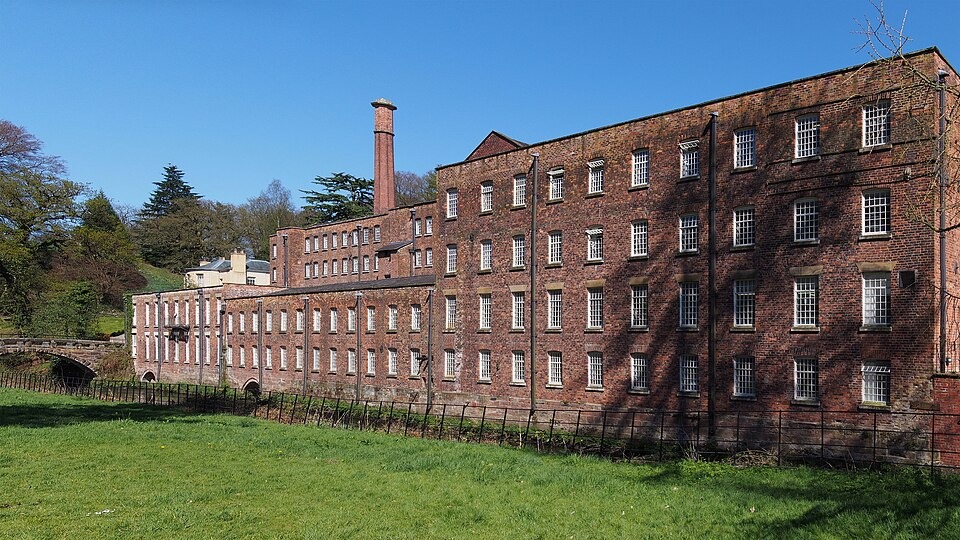
A book can tell you far more about industrialisation than an old mill ever will. Standing beside one is different. You get a sense of how big the place actually was and how many people it must have taken to keep it running. Rooms that are quiet now would once have been full of machinery and people coming and going with the shifts. What happened inside those walls was part of everyday life for the town around them.
Then one day the machinery stopped, and the building remained.
There is something almost archaeological about modern Britain because our previous lives are constantly visible beneath the present one. Victorian warehouses become flats. Mills become offices. Railway stations become cafés. Chapels become houses, restaurants or climbing centres. Banks become pubs and pubs become supermarkets, although the direction of travel between those last two seems to depend upon the decade. We continue living inside structures created for lives very different from our own.
There is a tendency to think that changing an old building somehow makes its preservation less successful. I don't think that's necessarily true. If a new use keeps the building standing, that may be considerably better than leaving it empty simply because its original purpose has disappeared. We cannot preserve Britain by embalming it.
Cities and towns are living things. People need houses, workplaces, transport and shops. Buildings develop structural problems, industries disappear, and communities change. There would be something faintly absurd about insisting that every Victorian mill remain a Victorian mill after the cotton industry has departed, particularly if the alternative is a magnificent empty building slowly becoming suitable accommodation for pigeons. Preservation without use can become another form of abandonment.
Old buildings have always found new uses. A mill can become flats without losing everything that made it a mill, and an old station does not stop being recognisable simply because trains no longer arrive there. Much depends on what survives the conversion. Keeping the proportions, ironwork or other parts of the original building can allow it to carry on as part of the town rather than leaving it empty or knocking it down.
That requires imagination and occasionally money, which tends to make the imagination disappear remarkably quickly. Starting again can look easier. Old buildings come with awkward columns, odd floor levels and bits that cannot simply be moved because they are inconvenient. Clear the site, and many of those problems disappear with it.
Sometimes that is necessary. Not every old building is beautiful, structurally sound or historically significant, and age alone cannot provide indefinite immunity from the bulldozer. If it did, Britain would eventually become impossible to alter. But once a building has gone, the argument about whether it should have survived is rather academic.
We can reconstruct its appearance, retain a wall or name the apartment block after whatever was demolished to build it, one of the stranger rituals of modern development, but the original fabric has disappeared.
The Foundry. The Mill. The Old Works. All excellent names for buildings erected where the foundry, mill and old works used to be.
There is an irony in destroying the thing that gave a place character and then borrowing its vocabulary to sell what replaced it. Even after removing old buildings, we frequently try to manufacture the feeling of having kept them. Exposed brick, old beams, industrial windows and cobbled courtyards are routinely used to give new developments a sense of established character. Genuine age has qualities that newness cannot immediately acquire.
Age shows itself in small ways. Buildings settle, materials weather and people alter them over the years, sometimes for reasons that are no longer obvious. Those changes become part of the building, even when nobody planned them. Nobody builds a thousand-year-old church; you have to wait.
None of this makes older automatically better. Britain has produced dreadful architecture in every century and preserved enough of it to prove the point. The Victorian period alone gave us extraordinary railway stations, civic buildings, engineering works and houses, along with structures that presumably looked unfortunate even before soot became involved. Age can tell us something has survived. It cannot tell us whether it deserved to.
What a place can tell us is more interesting.
A palace tells us how rulers lived. A stately home can tell us about wealth, land, art, politics, servants, empire and the extraordinary number of rooms apparently required before central heating. These places matter enormously, and preserving them gives us access to craftsmanship and historical evidence that would otherwise disappear. But history viewed entirely through great houses develops a peculiar perspective.
Where did everybody else live?
The workers' terrace, council estate, corner shop, factory, working men's club, chapel, school and public house belong to the historical record too. They may lack marble staircases, but considerably more people encountered them. A modest house can tell us about family size, sanitation, domestic technology, class and changing expectations of privacy. A factory wall can tell us where an industry existed, while an old shopfront can preserve the proportions of a street before national chains standardised it.
These places are sometimes allowed to disappear because they are too common. Then, rather suddenly, they are rare. It is easy to assume an ordinary building needs no particular attention while thousands like it survive. By the time only a handful remain, much of the decision has already been made.
Industrial heritage illustrates this particularly well. For much of the nineteenth and twentieth centuries, factories were not picturesque remnants of a heroic industrial age. They were where people worked. Mills were noisy, dangerous and frequently unpleasant. Chimneys filled towns with smoke, industrial landscapes could be brutal, and the prosperity they generated was distributed with varying degrees of enthusiasm.
When the factories closed, people were not necessarily sorry to see the back of them. They had provided work, but they could also represent dangerous conditions, lost jobs and an industry that had disappeared. It took time before some of those buildings began to be looked at differently.
Years later, the same factory can mean something else. People who never worked there may know it as part of the town rather than the place where jobs disappeared. The chimney is simply something they have always seen on the skyline, and machinery once thrown away as obsolete starts turning up in museums.
There is a danger in remembering only the attractive bits. Take a steam locomotive: the engineering can be extraordinary, but working around the industry was not always safe or pleasant. The same problem appears elsewhere. Country houses had servants, villages had poverty, and castles were not built to improve the view. Those things belong in history too.
None of that prevents us admiring what people made. The engineering inside a factory can still be extraordinary, just as the paintings in a country house can be worth seeing. Knowing more about the people who worked in those places, or where the money came from, adds to the story rather than spoiling it.
We sometimes talk about history as though we have to decide whether we are for or against it. Finding out something unpleasant about a person does not mean everything connected with them has to disappear. Nor does keeping an object mean we approve of the person who owned it or the circumstances in which it was made. Museums would be in trouble fairly quickly if that were the rule.
Some places survive because of what went wrong there. Old prisons, workhouses and battlefields are hardly celebrations, but they can still tell us something that would be harder to understand once the place itself had gone. Keeping them also leaves open the possibility that people in the future will ask different questions from the ones we ask now.
Heritage also operates at different scales. A cathedral can possess national importance while a small war memorial matters primarily to one village. A shop sign may mean almost nothing to somebody visiting the town and everything to the family who ran the business beneath it for sixty years. Local significance can be intensely specific, which is one reason it can be difficult to explain to somebody evaluating it from elsewhere.
“This matters because it has always been here” is not a particularly sophisticated historical argument, but it can contain a truth. Places provide continuity. Human beings orient themselves partly through landmarks: the church tower, bridge, pub, row of shops, factory chimney, tree, hill or building at the end of a street. Remove enough of them and a person can remain geographically in the same place while feeling that they have gone somewhere else.
This becomes particularly visible in rapidly redeveloped areas. One new building rarely destroys the identity of a neighbourhood. Eventually, however, enough distinctive structures can disappear that the place begins to resemble everywhere else. There is a strange contradiction in travelling enormous distances to visit places precisely because they do not look like everywhere else, then constructing new development as though local distinctiveness were an administrative inconvenience.
That is not an argument for making every new building pretend to be old. Fake history can be as depressing as careless modernity. Georgian proportions assembled from plastic mouldings do not automatically produce Georgian architecture, and there is something dishonest about constructing a building that appears to have survived events occurring centuries before its foundations were poured.
It is easy to forget that the buildings we now call historic once changed their surroundings too. Railway stations arrived in established towns, terraces replaced whatever stood there before, and churches were rebuilt or enlarged over centuries. Some of the buildings going up now will probably be the ones somebody argues about preserving in another hundred years.
A town does not need to choose one century. A medieval church, Georgian square, Victorian station, twentieth-century civic building and genuinely good twenty-first-century building can stand beside one another without any of them impersonating the others. Each generation gets to add something.
That is where preservation becomes inheritance.
We receive places already altered by people before us and, in turn, alter them ourselves. Keeping something does not mean freezing it according to our preferences. Some decisions can be reconsidered later and others cannot.
They can always demolish something we preserved; they cannot preserve something we demolished.
Buildings are only part of that inheritance. Other things disappear without leaving an empty site behind. A dialect word can vanish when the last generation using it stops. A traditional method can be forgotten. Music, recipes, customs, stories and crafts survive only while somebody continues to know them.
A medieval building can survive locked. A traditional skill cannot. Someone has to know how to do it, and somebody else has to care enough to learn.
That makes preservation a matter of knowledge as much as objects. Apprenticeships, local museums, archives, oral histories and community organisations can keep the information surrounding things alive. A tool without somebody who understands how it was used is only partly preserved. A photograph without names gradually becomes a photograph of strangers. A building whose function has been forgotten becomes architecture detached from the lives that gave it meaning.
Old places tend to raise questions once you notice them. A church sitting on an odd patch of high ground, a building whose original use is no longer obvious or a road taking a route that makes little sense today can all have an explanation. Finding out why they are there often tells you something about the people who used the landscape before you.
Children do this particularly well. Give them an old building, and they want to know who lived there, what happened inside and why it looks the way it does. Adults seem to get rather better at walking past without asking.
Being there also helps with things that are difficult to picture from a description. The walls of a castle give you some idea of what defence actually involved. A small workers' cottage makes overcrowding easier to imagine, while the machinery in a mill gives some sense of the size of the industry around it. None of that replaces reading the history, but it gives the information something physical to attach itself to.
There is an emotional part to this as well. People often become interested in history because something caught their attention first: a ruined castle they saw as a child, a story told by a grandparent, an old map of their street or something dug out of the ground. Wanting to know more usually comes before knowing very much at all.
That is one reason visitor numbers cannot be the only measure of whether a place matters. Tourism can bring money into an area, but not every historic site needs a café and a queue outside before it is worth keeping. Some places are important locally; others contain evidence that may become more useful as our understanding changes. Plenty will never attract crowds, and there is nothing particularly wrong with that.
Neither can heritage become a veto against ordinary life. Communities should not be transformed into museums for visitors while residents cannot afford to live in them. Buildings need to meet modern needs. Accessibility, energy efficiency and housing all have claims of their own. The past should enrich the present rather than preventing anybody from having one.
There will always be arguments over where the balance lies. Buildings will be lost that somebody believes should have been saved, while others will be preserved at extraordinary expense and leave somebody wondering why. Future generations will disagree with our choices because they will value things differently. Some structure currently considered hideous will eventually acquire a preservation society full of people explaining its misunderstood importance.
That disagreement is probably healthy. Deciding what deserves to survive is also a decision about what evidence of ourselves we intend to leave.
We inherit a country already written upon. Roman roads cross older landscapes. Medieval churches stand beside Victorian schools. Industrial canals pass modern housing estates. Motorways slice through all of them. Each generation receives the marks left by previous ones and adds another layer.
We cannot keep everything, and nor should we try. Old things are not automatically better than new ones. What surviving things give us is the chance to question the past while some of its evidence is still here. A castle tells us about power, a manor about wealth, a factory about labour and a terrace about ordinary lives. A stone circle may tell us something we do not entirely understand at all, which is perhaps one of the best reasons for leaving it where it is.
Britain has been built, demolished, rebuilt, occupied, abandoned, adapted and argued over for thousands of years. For the moment, we are the people holding the keys. We have to decide what can change, what might find another use and what would leave something permanently absent if it disappeared.
The people who come after us may make different choices. They can alter what we preserved and question what we valued. What they cannot do is recover everything we decided they would not need.
Heritage is a conversation between the dead, the living and people who have not arrived yet. Every generation gets a turn.
We should be careful how much of it we decide to have the last word on.

Post a comment