
The Neighbours Who Refused to Let Victoria Baths Disappear
When Manchester’s Victoria Baths closed in 1993, a community campaign fought to preserve the building. More than three decades later, its survival reveals how much work lies between saving a landmark and giving it a future.
By R. D. Kerr
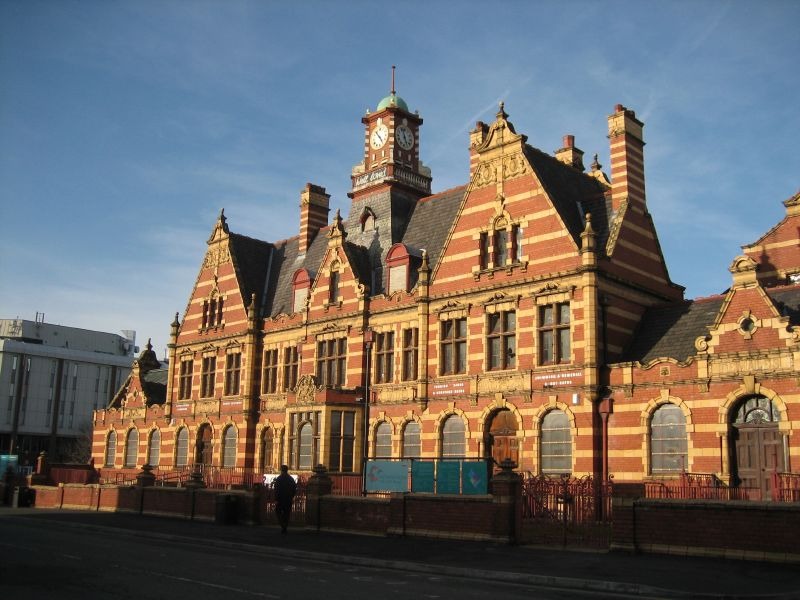
There are easier buildings to save than an Edwardian swimming baths. They generally have smaller roofs, fewer windows and considerably less plumbing. Manchester's Victoria Baths has all three in abundance, together with decorative tiles, stained glass and enough architectural ambition to suggest that the city once considered a trip to the swimming pool an occasion worth dressing up for. It is a magnificent building, but magnificence can be expensive to maintain.
When Victoria Baths closed on 13 March 1993, its future became a question for the people who had known it as part of ordinary Manchester life. Generations had used its pools and bathing facilities, often without giving much thought to the artistry surrounding them. The closure removed a public service and left that important building without an obvious future. For those determined to preserve it, the relationship changed. They would have to campaign for something they had previously taken for granted.
The baths opened in 1906 on Hathersage Road, serving an expanding industrial city whose municipal ambitions extended beyond providing a place to swim. Its three pools, Turkish baths, private washing facilities, decorative tiling and stained glass reflected a belief that public facilities could be both useful and beautiful. One pool was converted into a sports hall in the 1980s, while the building had accommodated swimming competitions, dances and other activities. Victoria Baths was an impressive piece of municipal architecture, although most of the people who used it were probably more concerned with the water's temperature.
Today, its Grade II* listing recognises the building's architectural importance. During its working life, however, Victoria Baths was part of the city's everyday routines. People came to swim, exercise, wash and meet others. Its significance was established through ordinary use long before anyone needed to campaign for its preservation.
By the early 1990s, keeping the baths up had become increasingly expensive. Manchester City Council concluded that it could no longer justify keeping the facility open, and the doors closed in March 1993. Residents disagreed strongly enough to organise a campaign. The Friends of Victoria Baths emerged from that opposition, and the Manchester Victoria Baths Trust was established later that year, with ambitions to restore the building and eventually return swimming and Turkish bathing facilities to public use.
The scale of the task became apparent almost immediately. The baths were boarded up, parts of the building deteriorated, and substantial restoration funding was nowhere in sight. Supporters nevertheless continued organising open days, clearing rubbish and cleaning rooms so that visitors could see what remained behind the locked doors.
By 1996, volunteers were undertaking considerable clearing work to make the site safer for public access. The open days gave the campaign a practical advantage. People who might otherwise have known Victoria Baths only as a boarded-up building could walk through its tiled corridors and see the pools, stained glass and architectural details for themselves. It is easier to persuade somebody that a building deserves saving when they have been allowed inside it.
Much of the effort was necessarily unremarkable. Historic buildings tend to attract attention when a roof collapses, or a television camera arrives, rather than when somebody spends an afternoon removing rubbish or preparing a room for visitors. Yet the cleaning, maintenance and organisation helped keep the campaign alive through years of little certainty about what would happen next.
In 1998, the Trust worked with Community Health & Resource Centres and Manchester City Council on proposals to restore Victoria Baths as a Healthy Living Centre. A business plan was prepared, followed by applications for Heritage Lottery funding. The proposal offered a possible route towards bringing the building back into public use, although the financial obstacles proved considerably more difficult to overcome than the paperwork.
Support continued to grow. Open days attracted new members, while swimmers including Sunny Lowry and James Hickman lent their support. Victoria Baths also began attracting interest as a filming location, bringing the building to the attention of people who might never have visited it as a swimming facility.
In 2001, Manchester City Council gave the Trust formal management responsibility for the building, allowing it to improve security and pursue repair grants. The following year brought the first major repair work since closure, supported by English Heritage. Roofs were patched and dry rot treated, although the larger lottery applications for the proposed Healthy Living Centre were unsuccessful.
The campaign had spent almost a decade keeping Victoria Baths in public view, attracting supporters and carrying out whatever repairs its resources allowed. It had also discovered that finding a future for a large Edwardian building was rather more complicated than persuading people it deserved one.
Then arrived the television cameras.
In September 2003, Victoria Baths won the BBC's Restoration competition, in which viewers voted for historic buildings they believed deserved saving. The victory secured £3 million in Heritage Lottery funding and brought national recognition to a campaign that had begun with residents trying to prevent the loss of their swimming baths.
According to the Trust's historical account, Victoria Baths received more votes than all the other finalists combined. For supporters who had dedicated years clearing rubbish, organising open days and pursuing funding applications, the result was an extraordinary change in circumstances.
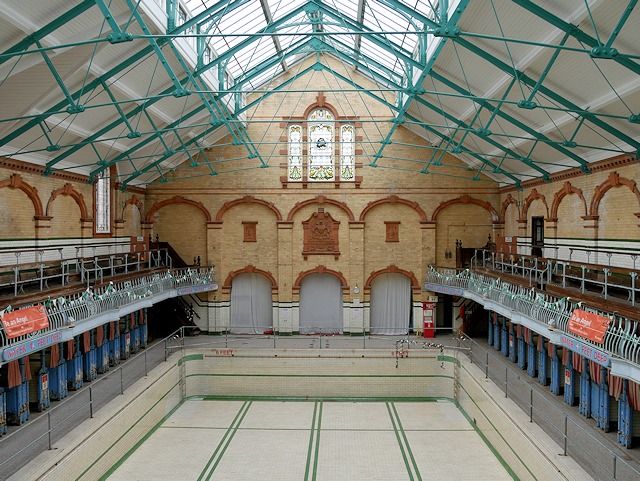
The award allowed a major phase of conservation to proceed. Work beginning in 2007 focused on restoring the exterior of the building's front block, including its brickwork, terracotta, windows, and stained glass, as well as repairs to important interior features. The first phase was completed in 2008.
The Trust states that more than £5 million has been spent on Victoria Baths overall, with contributions from grants, donations and public fundraising. The television victory had made substantial repairs possible, but the complex was still far from fully restored. An Edwardian swimming baths does not become inexpensive to maintain simply because the nation has voted to save it.
Victoria Baths remains the property of Manchester City Council. The Victoria Baths Trust manages it on the council's behalf, operating as a registered charity supported by trustees, staff and volunteers. The arrangement has enabled the building to find a new purpose, though it has not reverted to its former role as a council-operated swimming facility.
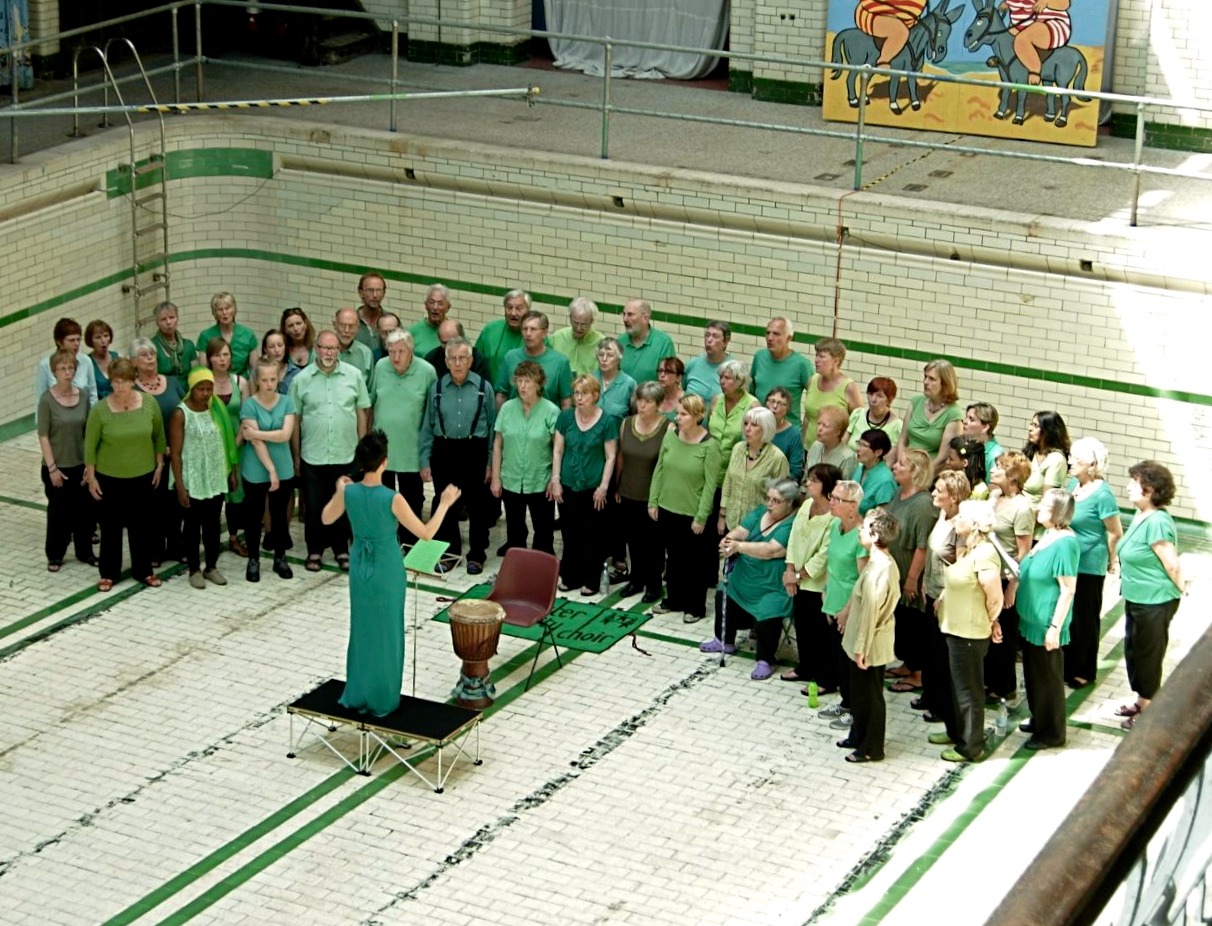
Today, Victoria Baths hosts exhibitions, festivals, tours, weddings and other events. The Trust's 2024 impact report recorded more than 35,000 visitors. People who once arrived carrying swimming costumes and towels have been succeeded by visitors attending activities that would have seemed rather unusual on the first municipal timetable.
Some of those activities help pay for others. The Trust's impact report explains how commercial income and fundraising support its community programme. Hiring out a former municipal baths for a wedding might seem an unlikely way of keeping its public purpose, but the building needs money as well as enthusiasm. Revenue-generating events help make activities with wider community benefit possible.
Visitors could explore Victoria Baths free of charge on Welcome Tuesdays during the 2026 season, with guided tours offered at an additional cost. Opening dates varied throughout the year.
The tiled interiors, original staircases and arrangement of the pools are among the features that make Victoria Baths worth preserving, yet adapting them for modern use requires care. Some areas are difficult for visitors with limited mobility to reach, and the building does not currently have a passenger lift. Making the baths more accessible without damaging their historic character is one of the continuing challenges of restoration.
The Trust's 2024 impact report recorded 98 volunteers contributing 606 hours across the year. Volunteers help run events, welcome visitors and support the community programme.
The Victoria Baths Archive represents another part of that effort. Its collection includes photographs, documents, objects, and personal memories associated with the building and Manchester's broader bathing history. Some material was left behind when the baths closed, while former users and members of the public have donated other items.
Prue Williams, a member of the Friends of Victoria Baths, researched the building's history and produced Victoria Baths: Manchester's Water Palace, published by the Friends in 2004. The collection of photographs, documents and memories developed into a more formal archive, with the Heritage Lottery Fund awarding £50,000 towards its conservation and public accessibility in 2005.
The archive gives the building another kind of history. Its decorative tiles and stained glass tell us something about Edwardian municipal ambition, while the photographs and recollections reveal how people actually used the place. A swimming bath can be admired for its architecture long after the pools have closed, but its significance to the people who learnt to swim there is rather harder to preserve without their stories.
Behind the public events and historical displays lies the less celebrated work of keeping the organisation functioning. A historic building needs maintenance, insurance, administration, staff, volunteers and a programme capable of bringing people through the doors. Events have to be organised, repairs arranged and funding applications prepared. Community unity is an important resource, but someone still has to manage the accounts and ensure the next event can take place safely.
The BBC’s Restoration victory is understandably the best-known moment in the campaign. It brought national attention and funding for work that had previously seemed beyond reach. Yet the campaigners had already spent a decade protecting Victoria Baths before the programme aired. The years since have required further fundraising, repairs and public involvement, carried forward by people who inherited the responsibility from those who began it.
The arrangement also raises a question about how much communities can reasonably be expected to preserve. Victoria Baths is publicly owned, but its operation depends on charitable management, event income, donations, and voluntary effort. That partnership has kept an important building accessible and given it a new purpose, although the Trust must continually find the resources to sustain it.
Victoria Baths has gained a new purpose as a heritage and events venue. Its swimming pools have been closed since 1993, leaving the neighbourhood without the public facility that generations of residents once used.
More than thirty years after closure, Victoria Baths continues to welcome visitors and preserve the history of its former life. There has been no single moment at which the job could be declared finished. The work has passed from the founding campaigners to later trustees, staff and volunteers, each helping to a project whose future still depends on continued support.
The people who originally entered Victoria Baths came to swim, bathe or watch a competition. Those who fought to save it were responding to the possibility that a familiar part of Manchester might disappear. Today’s visitors encounter a building crafted by both histories: the public institution it once was and the community effort that allowed it to survive.
There are undoubtedly easier buildings to save than Victoria Baths. Manchester is fortunate that, when this one closed, enough people decided it was worth the trouble.

Post a comment