
This Is Not Who We Are
When Did a Council House Become a Test of Nationality?
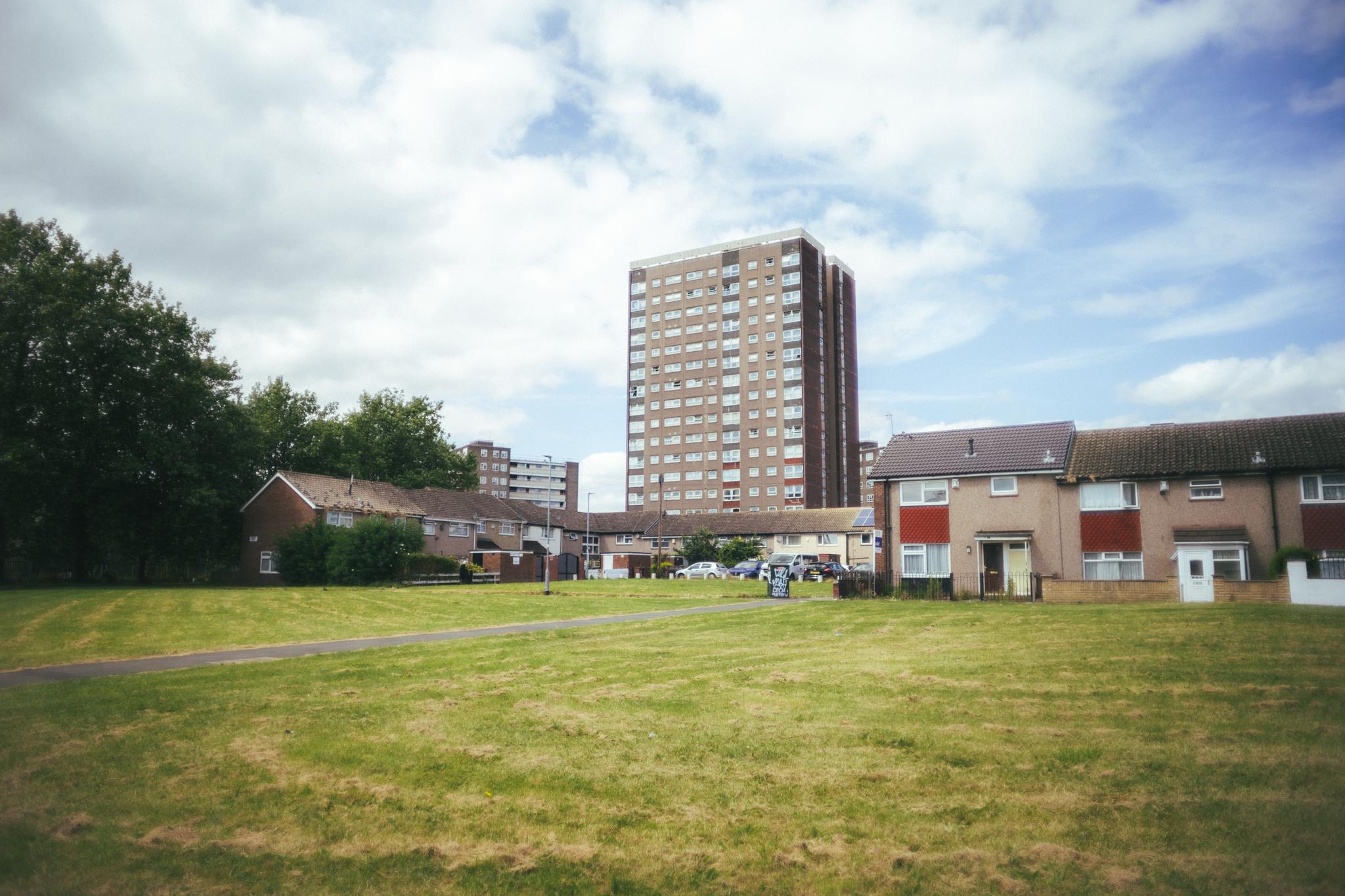
Six months is apparently long enough to stop a council tenancy being a home and become an immigration policy. There is nothing unreasonable about arguing that British citizenship should carry advantages when scarce public resources are allocated. Citizenship must carry rights and responsibilities, or it becomes little more than an unusually expensive travel document. Britain also has a severe housing shortage; councils are struggling with temporary accommodation, and families can spend years waiting for a social home.
The Conservatives’ latest answer is to change who gets the houses. The party has proposed ending eligibility for new social-housing tenancies for many foreign nationals in England and removing some foreign nationals from social homes they already occupy. The Conservatives argue that doing so would release around 230,000 homes for British families. The arithmetic is certainly attractive: there are not enough social homes, British families are waiting for them, therefore British families should receive priority. The difficulty begins when the numbers acquire names and addresses.
The phrase foreign national does an enormous amount of work. It sounds temporary, almost by definition: somebody from somewhere else who happens currently to be here. Yet it can include people who have lived legally in Britain for years, worked here, paid taxes here and raised families here. Some may have occupied the same social home for decades. Twenty years is a remarkably long time to remain somebody’s guest.
There are really two policies hiding inside the proposal. One concerns who should receive a social home in future. The other concerns whether somebody who qualified under the rules Britain already set should lose the home they already have because nationality has subsequently been placed above the circumstances that qualified them for the tenancy. Priority for future allocation and retrospective removal are not the same thing.
There is a reasonable argument underneath all of this. There are not enough social homes for the people who need them. Temporary accommodation costs councils enormous sums. Families can spend years on waiting lists while private rents consume an increasing share of household income. When a British citizen struggling to find somewhere affordable discovers that a non-citizen has a council tenancy, it is not difficult to understand why a politician promising to put British families first might find an audience. Dismissing that frustration as racism would be both lazy and counterproductive.
The problem is that this argument can leave the impression that social housing is presently available to anybody who arrives in Britain and asks where the council keeps the keys. It isn’t. Immigration status already affects access to public funds and housing assistance. Many temporary migrants are subject to No Recourse to Public Funds, while eligibility for social housing is already restricted according to immigration status. The foreign national under discussion is therefore not necessarily somebody who stepped off an aeroplane on Tuesday and received a council house on Wednesday.
The official figures make the picture less dramatic still. In England in 2024–25, 89% of lead tenants receiving new social lettings were UK nationals. Households recorded as refugees accounted for 2.3% of new lettings. There are legitimate arguments about who should qualify and under what conditions, but a system in which almost nine out of ten new lead tenants are UK nationals is an unusual definition of British families being pushed to the back of the queue.
Immigration can obviously increase housing demand. A country that increases its population without increasing homes and infrastructure accordingly is practising bad government, and immigration policy cannot sensibly be separated from housing policy. More people require somewhere to live. The peculiar trick is allowing demand to rise without building enough homes and then becoming surprised that people are competing for them.
The reverse matters just as much. Decades of insufficient social housing construction cannot be repaired by changing who is permitted to occupy the houses already standing. If ten families need five homes, changing which five families receive them may alter the allocation, but it does not produce house number six. You cannot solve a shortage of houses by changing the nationality of the person who is homeless. You can change who loses, which is something rather different.

Retrospective removal is harder to defend. Changing the rules for somebody who has not yet applied is one thing. Changing them after somebody has lived in the same house for years is another. By then people have paid rent, decorated rooms, got to know the neighbours and built their lives around local schools, doctors and work. Somewhere along the way, a tenancy became a home.
A tenancy may be recorded in a council database, but the life conducted inside it is not administrative. If somebody qualified for social housing under rules established by the British state and built a settled life there, changing those rules retrospectively requires rather more justification than discovering that another column on the spreadsheet contains a different passport. Homes are inconveniently full of people.
There is a practical difficulty too. Social housing exists partly because the private market does not work equally well for everybody. Low wages, disability, children or caring responsibilities can make suitable private accommodation difficult to secure. If everybody in social housing could simply obtain an affordable private tenancy when required, Britain would possess a rather less dramatic social-housing crisis.
The housing need does not disappear when somebody loses a social home. The family may end up in temporary accommodation or seeking help through homelessness services. Children may have to change schools, while somebody forced to move may no longer be able to reach the same job. The problem has simply turned up somewhere else. Government is remarkably capable of saving money in one column by creating a more expensive problem in another.
There is something odd about the way we talk about integration. We expect people who settle here to work, contribute and become part of the community around them. That seems reasonable enough. A functioning society requires more than sharing a postcode.
But integration cannot be an examination whose result we refuse to recognise. If somebody has lived here for twenty years, works beside British colleagues, pays into the same tax system, sends their children to the same schools and knows which neighbour takes everybody’s bins in when they’re away, at some point they have done rather more than share a postcode. If the answer is still simply foreign national, perhaps we should have mentioned that the examination was impossible to pass.
Citizenship may reasonably confer additional rights. It is less obvious why it should make one neighbour’s established home more temporary than another’s. Britain has tried versions of permanent foreignness before. Post-war history contains generosity and prejudice, welcome and hostility, often on the same street. One achievement of the decades since has been learning, imperfectly and occasionally reluctantly, that somebody does not remain a newcomer forever.
The language makes this easier to forget. Foreign-born and foreign national are not interchangeable. Somebody can be born abroad and be British; somebody born in Britain may hold another nationality. Birthplace, nationality, immigration status and length of residence answer different questions. Collapse them together and a remarkably varied group of people becomes simply foreign, which is politically much easier to fit on a headline.
Hospitality has its limits as a description too. Somebody who arrived last month may reasonably be called a newcomer. Somebody who has spent twenty years working, paying taxes and raising children here has built a life rather than undertaken a particularly lengthy visit. Even the most generous hotel eventually stops calling you a guest.
Refugees make the problem sharper. A recognised refugee is not simply somebody who fancied trying Britain for a few years: the British state has accepted that they require protection, and under existing rules some can become eligible for social housing. If they subsequently qualify because they are genuinely in housing need, nationality becomes a curious objection. What precisely should they do instead? Return to the country Britain agreed they required protection from? Remain permanently outside the ordinary welfare system? Become British quickly enough to make their poverty acceptable? Policy becomes considerably less tidy when the slogan has to meet the person.
The same is true of language suggesting Britain is becoming a cash machine for foreigners. Social housing is not somebody walking up to the Treasury and making a withdrawal. Social tenants pay rent. Foreign workers pay taxes on the same basis as everybody else.
Many people affected by immigration rules participate economically in precisely the same communities as British citizens. Once somebody has been converted rhetorically into a cost, almost anything done to them can be presented as a saving.
There is an alternative answer to the housing crisis, although unfortunately it makes a considerably less exciting headline: build more housing. Build social housing in serious numbers. Make planning function. Use public land intelligently. Give councils and housing associations enough long-term certainty to build. Deal with empty homes where practical and improve the private rented sector so social housing is not the only refuge from impossible rents.
None of this is quick, and that is the political problem. Building a council estate takes far longer than changing an eligibility rule. Housing requires land, money, planning, construction workers, infrastructure and governments willing to continue a programme beyond the next announcement. Changing who qualifies can be accomplished much faster. But speed is not the same as solving something.
There is a conservative argument here too, although it leads somewhere rather different. Conservatives have traditionally placed considerable value on stable families, settled communities and the ability of people to put down roots. A home matters partly because of everything that grows around it: neighbours, schools, work and family life. Removing a settled family principally because its members remain foreign nationals sits rather awkwardly with that idea.
There is also a patriotic argument against the proposal. Patriotism should be more ambitious than deciding who gets less. Britain has absorbed people for centuries: Huguenots, Irish migrants, Jewish refugees, Caribbean migrants, South Asian families and Europeans arrived under radically different circumstances and became entangled with the country until their children and grandchildren were simply British. That process was frequently difficult, and Britain was often less welcoming than subsequent nostalgia pretends, but integration happened. The country changed and remained Britain.
None of this prevents Britain from controlling immigration. Governments can reduce migration, change the rules for future social housing applicants, or decide that citizenship should bring greater advantages. Those are political choices open to debate. Telling somebody who has lawfully built a settled life here that their home is now conditional is a rather different one.
A council house is not a medal for national purity. It is a home occupied by somebody who qualified under rules Britain established. Those rules can be changed, just as immigration policy can be changed. The housing shortage requires something rather more difficult: more homes, enough infrastructure and councils capable of dealing with the demand. Do not take a housing shortage created over decades and attach a foreign face to it because that is easier than laying bricks.
Having borders does not require Britain to become mean about belonging. There is nothing particularly controversial about citizenship bringing certain advantages, or expecting people who settle here to become part of the country. It becomes harder to justify when somebody does exactly that, and we move the finishing line anyway.
There are not enough social homes in Britain. That is a national failure, but the foreign nurse, refugee, pensioner or family already living in one did not create it. We should be very careful about pretending they did.
The Conservative Party is entitled to argue that British citizenship should mean more. The more interesting question is what we want British citizenship to mean. If it means responsibility, contribution, fairness, stability and belonging, those values should shape how Britain treats people as well as how Britain categorises them. Principles are easiest to maintain when nothing has to be sacrificed; a country demonstrates its character most clearly when resources are scarce.
A country confident in itself does not need to make somebody else less at home in order to prove who belongs. Whatever flag we put on such a policy, that is not who we should be.

Post a comment