

The Numbers Behind a Changing North West
The North West is getting wealthier, at least according to the regional figures. In Blackburn with Darwen, household income remains well below the regional average. Manchester's new developments might be easier to spot, but they are only part of the story.
By R. D. Kerr
Manchester’s city centre offers a convincing picture of economic change. Office developments, apartment buildings, and an expanding commercial district suggest a place that is drawing investment and employment.
Travel beyond the city, however, and the North West becomes a more complicated economic scene. Former industrial towns, coastal communities, commuter districts and rural areas may belong to the same region, but they do not necessarily share the same opportunities.
The latest household income figures illustrate the difficulty of describing prosperity across such a varied area.
According to the Office for National Statistics, gross disposable household income in the North West reached £22,523 per head in 2024. That was 6.1 per cent higher than the previous year, or an increase of 2.5 per cent after accounting for inflation.
It was an improvement, certainly. But the North West remained some distance behind the country as a whole.
The UK average stood at £25,965 per head, leaving the region approximately 13 per cent below it. London, by comparison, recorded £36,487.
These figures require a little explanation. Gross disposable household income measures the money available to the household sector for spending or saving after taxes, benefits and other adjustments. The total is divided by the number of residents to produce a per-head figure.
It is not the salary of an average worker, nor does it tell us what a typical family has left at the end of the month.
Nevertheless, it provides a useful indication of economic circumstances. The North West was becoming better off in real terms, but improvement is not necessarily the same thing as catching up.
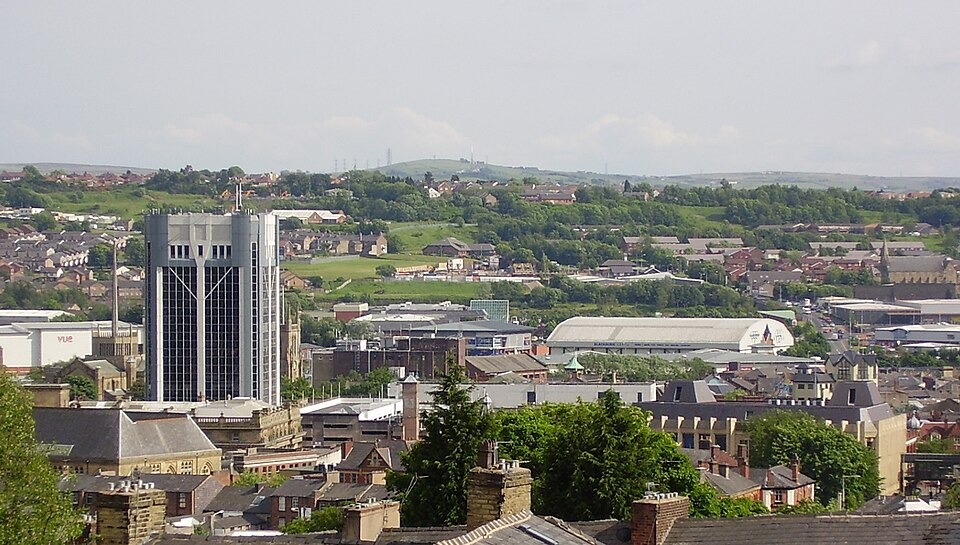
In Blackburn with Darwen, the 2024 figure was £17,707 per head. That's £4,816 below the North West average—quite a difference for somewhere included in the same regional total.
That is a considerable gap within a single region.
A regional statistic is useful for comparing one part of Britain with another, but it may obscure the circumstances of the towns and communities within it. Residents of Blackburn with Darwen do not automatically become wealthier because economic activity elsewhere in the region is increasing.
Nor does economic output necessarily tell us how much money local households have available.
Gross domestic product measures the value of goods and services produced within an area. A business district may produce considerable economic activity while employing people who commute from surrounding towns, with some profits flowing to owners or investors elsewhere.
The work takes place in one location. The people earning wages may live elsewhere.
That distinction matters in Greater Manchester, where ten boroughs form a connected economy without sharing identical circumstances. It applies across Merseyside, Lancashire, Cheshire and Cumbria too.
People do not necessarily work in the same place they live, however convenient that might make the statistics.
Employment provides another perspective. A high employment rate indicates that a relatively large proportion of working-age people are employed. Still, it says comparatively little about the wages, security or conditions attached to those jobs.
Having a job is one thing. What that job pays is another. Two towns might have similar employment rates, yet the work available in each could be quite different. A decent employment figure doesn't tell us much about whether people are earning enough to live comfortably.
There is also the practical question of reaching those jobs.
An opportunity in Manchester may look attractive to somebody living in a neighbouring town. However, the journey still has to fit around working hours, transport connections and the cost of getting there.
A job can be within commuting distance on paper and considerably less convenient in practice.
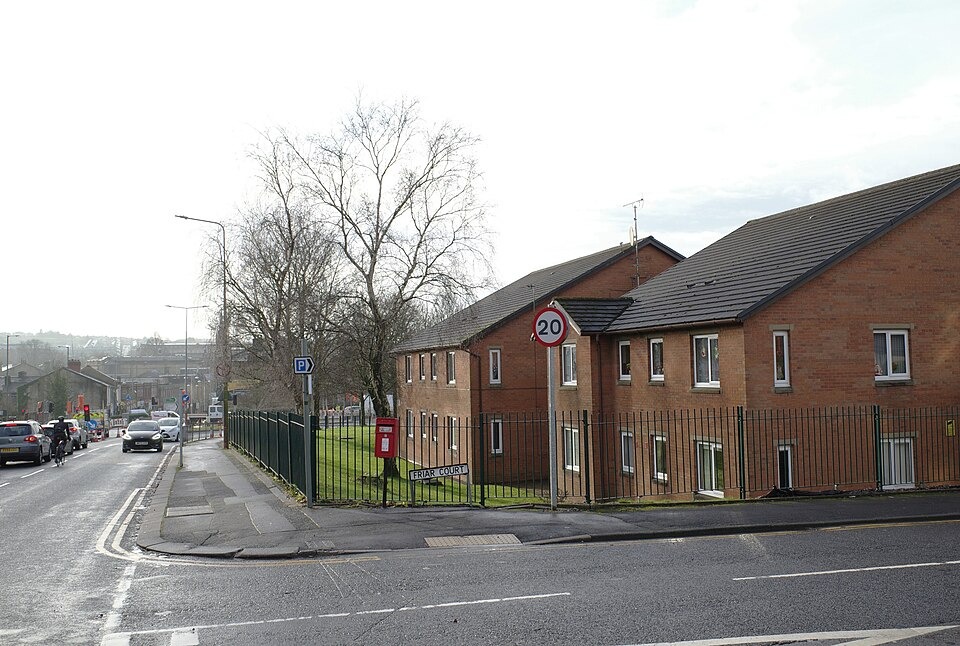
Housing affords a more measurable comparison.
The Office for National Statistics identified Hyndburn, in Lancashire, as one of the two most affordable local authorities in England and Wales in 2025. The median price of a home sold there was equivalent to 4.1 times the median annual earnings of full-time employees in the area.
Across England, the corresponding figure was 7.6.
The ONS also found that no local authority in the North West had a ratio above ten.
On this measure, Hyndburn appears considerably more affordable than England as a whole. But cheaper housing does not necessarily mean residents have more money to spare.
The figures compare house prices with earnings. They do not directly account for deposits, mortgage interest rates, private rents, or the circumstances of individual households.
A house may be relatively inexpensive by national standards and still be beyond the reach of somebody living nearby.
There is another distinction worth remembering. The housing figures use earnings based on where people work, whereas disposable household income is measured by where people live.
Somebody may work in Manchester, live in another borough and face housing costs influenced by demand from people employed across the wider city region.
Statistical boundaries rarely correspond neatly with the practical boundaries of people’s lives.
Taken together, the figures provide a more useful picture than any single measure.
Disposable household income in the North West increased in real terms in 2024, although it remained below the UK average. Blackburn with Darwen illustrates the differences concealed by the regional figure, while Hyndburn shows why housing costs need to be considered alongside income.
None of this proves that one community is succeeding while another is failing. Nor does it establish that commercial development in one district is responsible for the circumstances of households elsewhere.
What the figures do show is how difficult it can be to judge a region’s progress from a single headline.
For the North West, the important question is not simply whether more wealth is being generated. It is where that wealth appears in household incomes, what those incomes can buy and how circumstances differ between communities.
The region has made progress; whether people feel that improvement in their everyday lives is another question.
A regional average tells us something about the North West. It cannot tell us what it is like to live in every part of it.

Post a comment