
Rehabilitation or Revenge?
What Do We Actually Want Prison to Do?
Britain cannot quite decide what prison is for. Punishment is the easy part. Somebody has done something wrong, a court has decided that what they did is serious enough to warrant taking away their liberty, and off they go. There is an appealing simplicity to it: you did this, this is what happens, don't do it again. The difficulty begins when we ask what should happen between the prison gate closing and, in most cases, opening again.
This is where rehabilitation enters the conversation, usually accompanied by broad agreement. Politicians believe in rehabilitation. Newspapers believe in rehabilitation, depending somewhat on the newspaper and the day of the week. Most of us probably agree that somebody who goes into prison should emerge less likely to commit another crime. Then rehabilitation sends us the bill, and suddenly everybody becomes rather less enthusiastic.
Why should prisoners receive education when people outside struggle to access it? Why should they be taught a trade? Why should public money pay for counselling, addiction treatment, books, workshops or decent facilities for somebody who has broken the law? It is not an unreasonable response. If you have worked all your life, obeyed the law and struggled to pay for something yourself, discovering that somebody in prison receives it free can be irritating. The problem is what happens when the prisoner comes home.
We sometimes talk about prisons as though the people inside them have been permanently removed from society. For the majority, we have merely borrowed them. Six months, two years, five years: eventually the gate opens and the person we have spent a considerable amount of money keeping behind it walks back through. At that point, it would be rather useful if they didn't rob us again.
Punishment and rehabilitation need not be competing ideas. Prison is already the punishment. A person loses their liberty, privacy and much of their control over ordinary life. They cannot go home because they fancy it, see their family whenever they choose or wander down to Tesco because they have forgotten the milk. Somebody else decides where they sleep, when doors open and when they close. Outside, birthdays happen, children grow older, relationships change and years disappear.
Making those years deliberately useless does not necessarily improve anything. It certainly makes them harder. The question is whether that hardship serves a purpose beyond the punishment already imposed by the court. Somewhere around there, punishment can begin to look rather more like revenge.
Perhaps prisons could learn something from a rather unfashionable institution: the factory. That requires an immediate qualification. I am not suggesting forced labour, rows of convicts chained to machinery or any other arrangement the Victorians might have considered character-building. Nor should prisoners become a convenient source of cheap labour. I mean a factory only in the rather simple sense that, having put time, labour and money into it, we ought to expect something useful to come out of the other end.
What exactly do we expect a prison to produce? If somebody enters unable to read properly, there seems little virtue in ensuring they leave unable to read properly. If they have no qualifications, there is time to earn some. If they have never possessed an employable skill, there is time to learn one. Where addiction has repeatedly contributed to offending, treatment seems rather more useful than waiting for the familiar sequence of relapse, arrest and return.
Time is one resource prison has in abundance. It can be spent learning to plaster, lay bricks, cook, weld, decorate, repair things, maintain machinery, work with computers or grow something that survives longer than a supermarket basil plant. Engineering, horticulture, manufacturing, catering and logistics will not suit everybody, and some prisoners will want nothing to do with any of them. The practical question remains: when this person walks through the gate, can somebody outside reasonably employ them to do something?
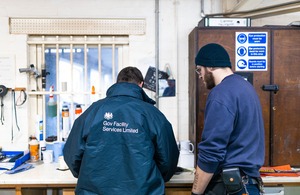
We have perhaps made rehabilitation sound too grand. The word suggests transformation: the offender enters one person and emerges morally reconstructed, ready to dedicate the remainder of their life to charitable works and Marcus Aurelius. I'd settle for a plasterer. Someone who gets up in the morning, goes to work, pays the bills, buys the shopping, complains about the weather, watches something dreadful on television and goes to bed. Most importantly, they don't nick anything.
There is considerable dignity in an ordinary life. For somebody whose life has repeatedly brought them into contact with the criminal justice system, ordinariness may be the most successful outcome imaginable. Rehabilitation does not need to manufacture saints. A worker, neighbour, parent, taxpayer or the bloke holding up the queue because he has forgotten his Clubcard will do perfectly well.
The difficulty is that rehabilitation cannot end at the prison gate. Imagine somebody steals a bag of shopping from Tesco. They are caught, convicted and receive whatever punishment the court considers appropriate. Seven years pass, and they apply for a job. Who are they now?
There are good reasons why a conviction may still matter years later. Some jobs involve particular risks, and employers have responsibilities to the people in their care. Depending on the offence, that can quite properly rule somebody out of certain work. What becomes harder to justify is treating the conviction as a reason to rule them out of ordinary life altogether. A sentence can end without everybody having to pretend the offence never happened.
We tell somebody they have served their time and then continue identifying them primarily by the thing for which that time was served: offender, criminal, ex-convict. We can put former in front if we're feeling particularly generous. Then comes the useful advice to reintegrate into society. Get a job, although perhaps not that one. Find somewhere to live, somehow. Build a stable life while repeatedly explaining the least stable part of your previous one. Become an ordinary citizen while understanding that you may never again be regarded entirely as one. If the person eventually returns to prison, we can say rehabilitation failed. Perhaps opening the gate was never enough to achieve it.
There is a moral question here too. Most ideas of justice leave some room for redemption, forgiveness or simply the possibility that people can change. If somebody can do something wrong but can never become anything more than the wrong they did, rehabilitation becomes impossible before the prison sentence even begins. A system cannot prepare somebody to return to society while assuming that the person who returns must always be defined by the worst thing they have done.
Some people, of course, will not change. There are dangerous offenders from whom society needs protecting, sometimes for a very long time. Others will waste every opportunity offered to them, manipulate those trying to help and leave prison determined to carry on exactly where they stopped. Human beings can be remarkably committed to making a mess of things. A sensible prison system has to recognise that without assuming everybody will fail, because some people do.
Some people will fail whatever opportunities they are given, but we accept that elsewhere without writing off the whole idea. Pupils leave school without qualifications and patients ignore medical advice. We don't respond by deciding that schools or hospitals are pointless. Rehabilitation will fail for some people too. That tells us very little about whether it is worth attempting for the rest.
Compassion can be removed from the argument entirely. Imagine that the person leaving prison is moving next door to you. Would you prefer that they had spent two years sitting around becoming increasingly angry and institutionalised, or two years learning how to earn a living? Would you prefer somebody expected them at work on Monday morning, or that Monday contained nothing at all? You don't have to like the person moving in next door to have an interest in the answer.
Rehabilitation is not simply something society does for prisoners. It also affects everyone the prisoner might otherwise encounter next. The burglary that doesn't happen never becomes a statistic. The shop that isn't robbed never knows it benefited from a training programme, and nobody writes a newspaper article about the assault that didn't occur. Successful rehabilitation is profoundly boring: somebody gets out of prison, finds a job and never goes back. Nothing happens, which is precisely what we wanted.
Then there is the money. Prison is expensive. Training costs money as well, certainly, as do teachers, workshops, addiction treatment, qualifications and proper preparation for release. Repeatedly paying to imprison the same person begins to resemble one of those wonderfully British arrangements in which everybody agrees the cheaper solution costs too much and consequently spends considerably more avoiding it.
At the same time, we complain about shortages of skilled workers. There is something almost comic about having working-age people, buildings, years of compulsory time and a country requiring skilled workers, yet failing to see how these things might occasionally be introduced to one another. This cannot become an excuse for exploitation or a convenient supply of cheap captive labour. Whatever training is provided has to retain some value once the prison uniform comes off.
That gives us a simple test: can this person get a job with it? Employers therefore become part of the question. There will always be occupations for which particular convictions matter. There should also be circumstances in which an employer can look at somebody who has served their sentence, decide they can do the work and expect them at eight o'clock on Monday morning.
Having somewhere to be on Monday morning helps. There is a wage coming in, a routine to follow and somebody expecting you to turn up. Over time, work gives the person other ways to describe themselves too. They might be a bricklayer, cook, mechanic, warehouse worker or plasterer. Being an offender becomes something in their past rather than the only thing anybody sees.

None of this requires forgetting victims. Prison reform can sometimes talk about offenders with such enthusiasm that the person they harmed seems to disappear from the room. That is a mistake. Someone whose home has been burgled, whose parents have been defrauded, who has been assaulted or who has lost somebody they love is under no obligation to become emotionally invested in the rehabilitation of the person responsible. Forgiveness cannot be demanded from a victim as another part of their sentence.
The state has a different responsibility. It must punish the offender, protect the public and decide what to do with the person during the period between conviction and eventual release. Taking that last responsibility seriously does not diminish the others. Preventing another offence is, after all, a fairly practical form of public protection.
We spend a lot of time asking whether prisoners deserve rehabilitation. There are other people involved in what happens after release. The taxpayer may end up paying for another prison sentence, prison officers see people return, families deal with the consequences, and somebody else may become the next victim. An employer may simply need somebody who can do the job. Rehabilitation affects all of them, whether or not any of them feel particularly sympathetic towards the person leaving prison.
The difficult part is paying for it. Political language begins tying itself into knots here. Rehabilitation is praised while the spending required to provide it is questioned. Prison capacity reaches crisis point, yet arguments about reform repeatedly return to whether offenders deserve whatever is being proposed. It is politically much easier to promise punishment than to explain why money should be spent on somebody the public may have perfectly good reason to dislike.
A prison system cannot rehabilitate people on rhetoric. Doing it properly requires teachers, instructors, workshops, treatment, recognised qualifications, links with employers and serious preparation for release. Somebody needs to ask where the person is going to sleep, what they are going to do on Monday and whether the qualification they spent a year earning is worth anything beyond the gate. Refusing to provide those things is a political choice. It also tells us something about how seriously we really take rehabilitation.
There is also the familiar objection that prisoners should not receive opportunities unavailable to law-abiding people. Again, there is something reasonable behind the frustration. Somebody working two jobs and struggling to obtain training may understandably object to seeing a prisoner receive a course free of charge. Denying the prisoner the course does nothing for the person outside. It leaves two people without the opportunity instead of one.
There is also the old idea of prisons becoming holiday camps if conditions are made too comfortable. Somebody having books, decent food or the chance to learn a trade is still somebody who cannot go home. None of those things gives them their liberty back. And nobody looks at a plumbing qualification and thinks three years away from home sounds worth it.
There is a point where making prison harsher stops telling us very much about whether it works. If somebody leaves less employable, more alienated and no better able to function outside, the extra misery may have achieved little beyond making the sentence worse. Punishment has a purpose beyond suffering itself. Once suffering becomes the purpose, we are getting rather closer to revenge.
Successful rehabilitation has a political disadvantage: it is almost impossible to celebrate. Political systems like visible achievements. New buildings can be opened, police operations produce arrest figures, and longer sentences can be announced. The former prisoner who wakes at six, puts on work trousers and spends the day plastering somebody's kitchen produces nothing worth announcing. Ten years later there is still no headline.
Yet that quiet disappearance may be one of the greatest successes the prison system can produce. The person has gone back into the common crowd: worker, neighbour, parent, nuisance in traffic, bloke buying milk, somebody complaining that everything costs too much. Not an offender, merely a person who once offended. Society has got an ordinary person back.
Some offenders need to remain in prison for a long time, and in some cases protecting the public has to come first. Others may never make much use of the opportunities offered to them. That doesn't change what happens with the many prisoners who will eventually be released. They come back into our towns, workplaces and neighbourhoods, and what happened during their time inside comes back with them.
The years inside can serve more than one purpose. They can punish the offence while also giving somebody a better chance of functioning when the sentence ends. Literacy, treatment, a useful qualification, somewhere to live and an employer willing to take a chance are not guarantees. Some people will still return to prison. For others, they may be the difference between another sentence and the wonderfully unremarkable business of getting up for work.
That does not excuse the crime or forget the victim, and nobody is pretending everybody can be saved. It simply asks rehabilitation to accomplish something measurable in ordinary life. If Britain genuinely wants prisons to punish and rehabilitate, it cannot continue praising both while only being willing to pay for one.
Otherwise, we should at least have the decency to stop calling it rehabilitation.

Post a comment