When Does a Book Stop Being an Object?
Books carry more than the words printed inside them. The notes, marks and memories they collect can turn an ordinary copy into something impossible to replace.
By R. D. Kerr
I write in books, which bothers some people considerably more than it bothers me. There is an idea that books ought to be kept pristine: no notes in the margins, no underlining and certainly no folding over the corner of a page. A book should leave your possession looking much as it did when it entered it.
I understand the instinct. I like books too. I look after them, object to coffee being placed on them and would be unhappy if somebody tore a page out of one. But somewhere on my shelves is a copy of Simon Armitage's The Dead Sea Poems that I have written all over, and I wouldn't swap it for a perfect new copy. The new one would contain the same poems, which is where things become interesting.
My copy is useful partly because of what has happened to it. There are things marked because I liked them, notes beside passages that made me think about something else, and evidence of whatever I was interested in when I happened to be reading. Some marks probably make considerably less sense now than they did when I made them. Others take me straight back to the thought that put them there.
My Penguin Classics copy of Aristophanes' The Wasps, The Poet and the Women, and The Frogs has acquired the same sort of life. I could buy another one easily enough. It might have better paper, a cleaner cover and considerably fewer interventions from R. D. Kerr. As a physical product it could be superior in almost every measurable way, but it still wouldn't be the same book.
Perhaps that is because a book begins as two things at once. There is the work itself, which can exist in thousands or millions of copies, and there is the particular object sitting in your hand. Aristophanes' plays do not change just because I underline something; my copy does.
That distinction becomes more obvious with second-hand books. Open one and occasionally somebody else is already there. A name on the first page, a date, a dedication or an old price written in pencil. Somebody has underlined a sentence for reasons you cannot know. A ticket falls out that has been acting as a bookmark since 1987. There may be a shopping list inside, a telephone number with too few digits or a pressed leaf that seemed worth keeping at the time. None of those things belongs to the text, but they have become part of that particular copy.
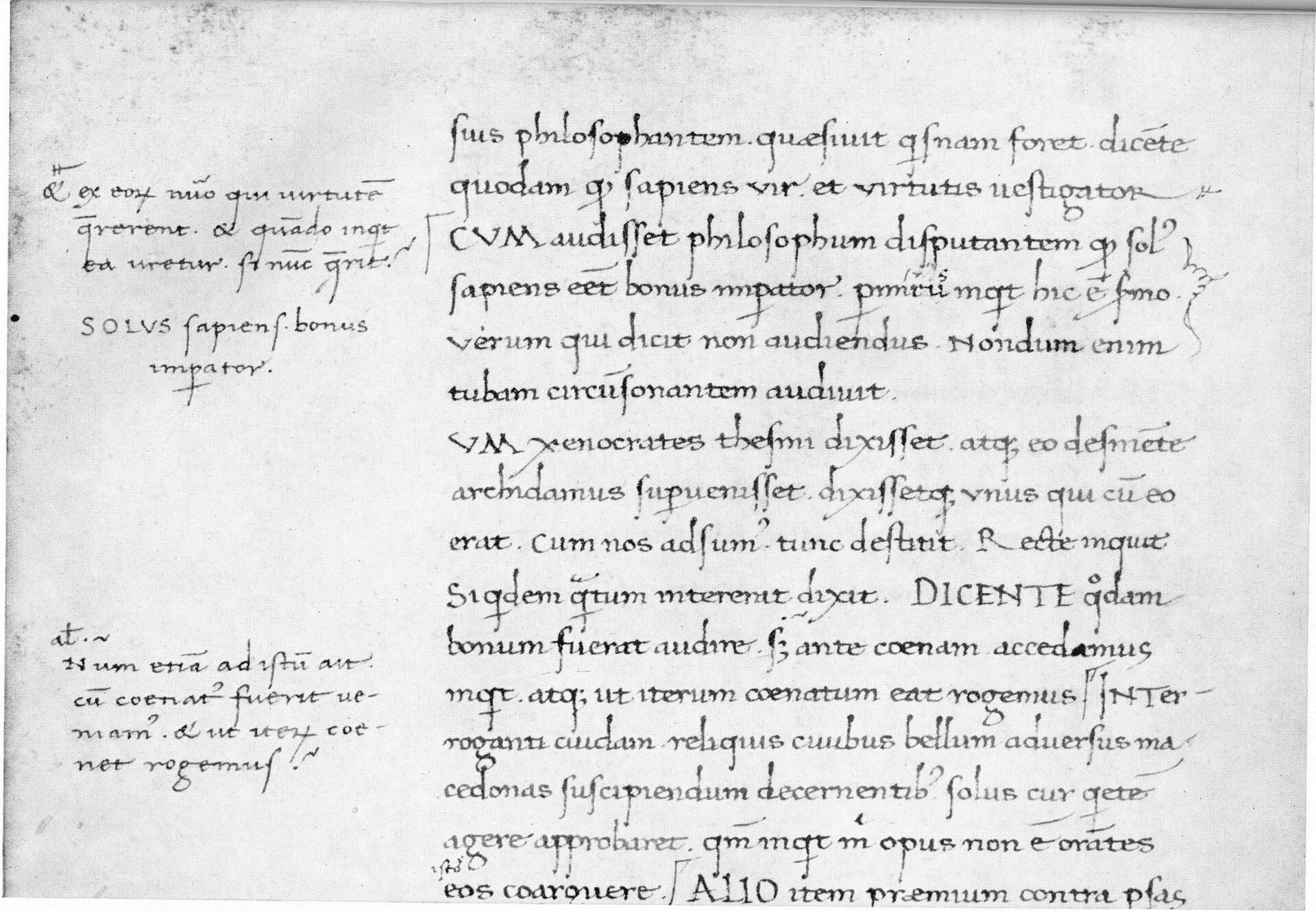
Sometimes the previous reader is irritating. They underline something you consider completely unimportant or write an observation in the margin that makes you want to argue with a stranger who may have been dead for twenty years. Occasionally they have helpfully identified every metaphor in a novel as though preparing the book for police examination. Even that changes the experience of reading it, because you are no longer holding only the author's words. There is evidence that somebody was here before you.
Libraries occasionally preserve this deliberately when the reader happens to be important enough. The notes of writers, politicians and scholars can become interesting because they show somebody responding to what they read. Their underlining matters. Their marginal comments are catalogued. Something most of us were once told not to do to a school book becomes valuable evidence once the person holding the pencil has acquired sufficient historical significance.
Most of our annotations will never deserve an archive, which is probably just as well. Nobody needs a research fellowship to establish why I put a question mark beside something years ago. Their value is more ordinary than that. A note can preserve the moment you encountered an idea, and returning to it years later can reveal as much about the reader as about the book.
Sometimes you agree with your earlier self. Sometimes you wonder what on earth you were thinking. A passage you ignored becomes important, while the sentence that once received three lines of commentary beneath it no longer seems particularly remarkable. The words haven't moved in the meantime; you have.
That is one reason rereading can be so interesting. We talk about returning to a book as though we are repeating an experience, but we cannot quite do that. The reader who opens it again is older and has accumulated things the previous reader didn't know. A book read at sixteen is not necessarily the same book at forty, even though every word remains where the author left it.
Annotations make some of that movement visible. They leave little archaeological layers of attention behind: what mattered then, what I noticed, something I didn't understand, or an argument I apparently felt strongly enough about to conduct with someone who had been dead for a century. It isn't a diary, but occasionally it behaves rather like one.
Digital books can do much of this perfectly well. I can highlight a passage on a Kindle, add a note and find it again without remembering which page it was on. Search is enormously useful, particularly when I'm trying to locate something rather than admiring my own history as a reader. There is no sensible reason to turn this into another competition in which paper must defeat a screen.
The physical copy does have one peculiar advantage, though. The history remains attached to the object without asking to be retrieved. Open the book, and there it is: the bent spine, softened pages, pencil marks and whatever you once used as a bookmark have all stayed together. You don't have to open an annotations menu to discover your younger self disagreed with somebody.
Books acquire other histories too. Some are gifts, and the person who gave you one may eventually matter more than the book they chose. Others are bought somewhere memorable, taken on holiday, carried through several house moves, or rescued from a box that was supposed to go to a charity shop. A cheap paperback can become surprisingly difficult to throw away once enough life has happened around it.
This is probably why the monetary value of a book and its actual value to its owner can become almost completely unrelated. My annotated copy of The Dead Sea Poems is unlikely to transform my retirement prospects. Writing in it has probably reduced whatever tiny resale value it once possessed, yet to me that has made it more valuable. A publisher can produce another copy of the text; it cannot produce another copy of mine.
It may happen earlier than that. My books don't wait until they're rare or valuable. They get pencil in the margins, old receipts shoved between the pages and corners that never quite flatten again. Some fall open at the same place because I've been back there too many times. By then the book on my shelf has started to become something a new copy couldn't quite replace.
None of this improves what the author wrote. It does something different because the book begins to record the reader as well. My notes are not part of The Dead Sea Poems, and my marks certainly aren't part of Aristophanes' plays, but they are now part of the particular copies sitting on my shelf.
I could replace my Penguin Classics Aristophanes tomorrow. I can track down the edition without much trouble. But the one on my shelf has years of pencil marks, and those aren't in the shops. Buy another, and I'd still own The Wasps, The Poet and the Women, and The Frogs. It just wouldn't be this one.
Post a comment