
The Parthenon Marbles
Can You Sell Something That Belongs to History?
There is a wonderfully British temptation when discussing the Parthenon Marbles to begin with paperwork. Lord Elgin had permission. Parliament investigated. Parliament bought the collection. The sculptures entered the British Museum in 1816. There are documents, committees, statutes and more than two centuries of institutional possession. Britain can therefore produce something approaching a receipt.
The difficulty is that a receipt only proves very much if the person selling something had the right to sell it. That is the question beneath two centuries of argument about the sculptures removed from the Parthenon in Athens. It is frequently presented as a dispute between Britain and Greece over whether Lord Elgin stole them. That makes for a satisfying argument because it offers two comfortable positions: stolen or legally acquired, thief or preservationist, return them or defend the museum.
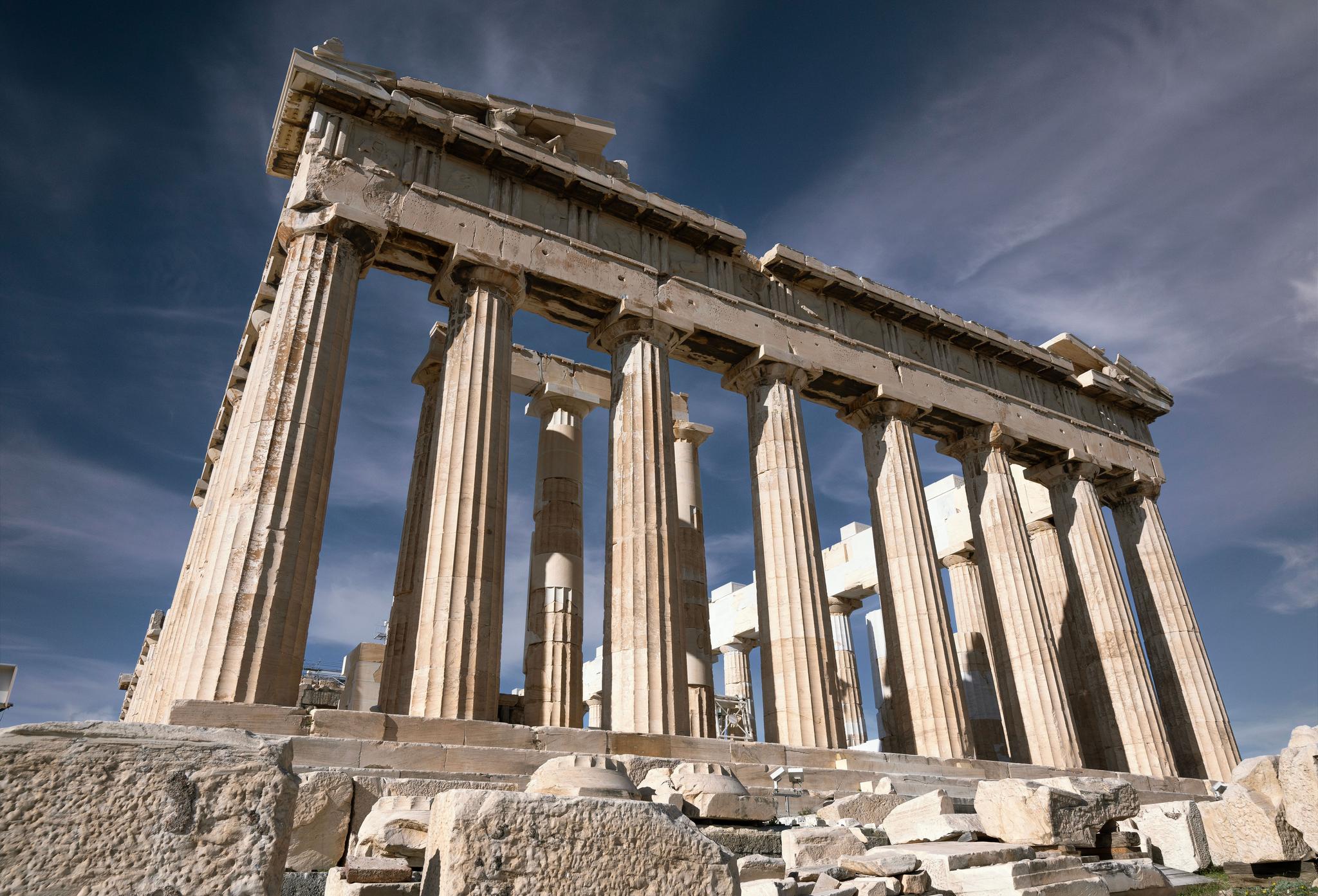
The history is less accommodating. Thomas Bruce, seventh Earl of Elgin, arrived as British ambassador to the Ottoman Empire in 1799. Athens was then under Ottoman rule, as it had been for centuries. Elgin obtained permission from the Ottoman authorities for his activities on the Acropolis and, between 1801 and 1805, his agents removed substantial portions of the surviving sculptural decoration from the Parthenon as well as material from other Acropolis buildings. After financial difficulties, Elgin eventually sold his collection to the British government. A parliamentary committee examined the acquisition in 1816, and Parliament subsequently purchased the collection for the British Museum. The Museum maintains that Elgin acted with the knowledge and permission of the legal authorities of the period and that the parliamentary investigation found his acquisition lawful. Greece disputes the legitimacy of the removal and has formally sought the permanent return of the British Museum's Parthenon sculptures since 1983. Its case is also more specific than the familiar demand to “give the marbles back”. The Greek Ministry of Culture argues that these sculptures are parts of a surviving monument whose architectural and historical meaning is diminished by their separation.
This distinction matters because the question is not whether every Greek vase in every museum outside Greece must be packed into a crate tomorrow morning. Nor is it whether every Roman object belongs in Rome, every Egyptian artefact in Egypt or every object made within the modern boundaries of a country somehow remains eternally attached to its soil. Human beings have traded, gifted, inherited, carried, stolen, excavated and collected objects for thousands of years. Apply a simple rule of geographical return to the world's museums and the resulting removal vans would probably constitute a new branch of international logistics.
The Parthenon sculptures are different because they were not merely found in Greece. They were created as part of a surviving monument, and that distinction changes the argument from one simply about where an object came from to what the object actually is.
The Parthenon was constructed in the fifth century BC, and its sculptural programme comprised pediments, metopes and a continuous frieze conceived in relation to the architecture. About half of the original sculptural decoration has been lost over the centuries. Of what survives, most is now divided between Athens and London, with smaller pieces elsewhere. The British Museum itself acknowledges that Elgin removed about half of the sculptures that remained at the beginning of the nineteenth century. That makes them awkward objects for the conventional museum argument because they are simultaneously artworks and pieces of architecture.
We would instinctively understand this distinction in Britain. Imagine that a foreign diplomat visiting England during a period of occupation obtained permission from the occupying administration to remove portions of the sculptural decoration from Westminster Abbey. Suppose the pieces were legally exported according to the law operating at the time, purchased by another country's parliament and beautifully preserved in its national museum for two hundred years. The paperwork might be impeccable, but I am not convinced Britain would stop asking for the stones back.
That hypothetical also exposes the weakness in treating legality as the end of the argument. The Ottoman Empire was the recognised governing authority in Athens when Elgin operated there. That fact cannot simply be wished away because modern Greece dislikes the answer. Modern Greece did not exist in its present political form when Elgin was there, and pretending otherwise would make the history rather more convenient than it was. But that does not make the moral question disappear. There is a difference between possessing political authority over a place and possessing an unlimited moral right to dispose permanently of its cultural inheritance.
If I sell you my neighbour's garden wall, the quality of the receipt does not entirely settle the question of ownership. The analogy is imperfect, as analogies generally become when subjected to lawyers, but the problem remains.
The Parthenon existed for more than two millennia before Elgin arrived. It had been a temple, church and mosque. It had survived political systems that came and went around it, as well as warfare, conversion, alteration, neglect and a catastrophic explosion in 1687 after the Ottomans used it to store gunpowder. By the time Elgin's agents began removing sculpture, the monument already belonged to a history much longer than the government administering Athens at that particular moment. The question is whether any government can sell that.
Legally, perhaps. Morally, I am less certain. We recognise similar limits in other forms of ownership. A person can own a listed building without possessing an unrestricted right to demolish it. A landowner may discover archaeological remains without necessarily being entitled to destroy them because they interfere with the patio. Ownership and stewardship overlap because some objects acquire significance beyond the immediate interests of whoever happens to possess them.
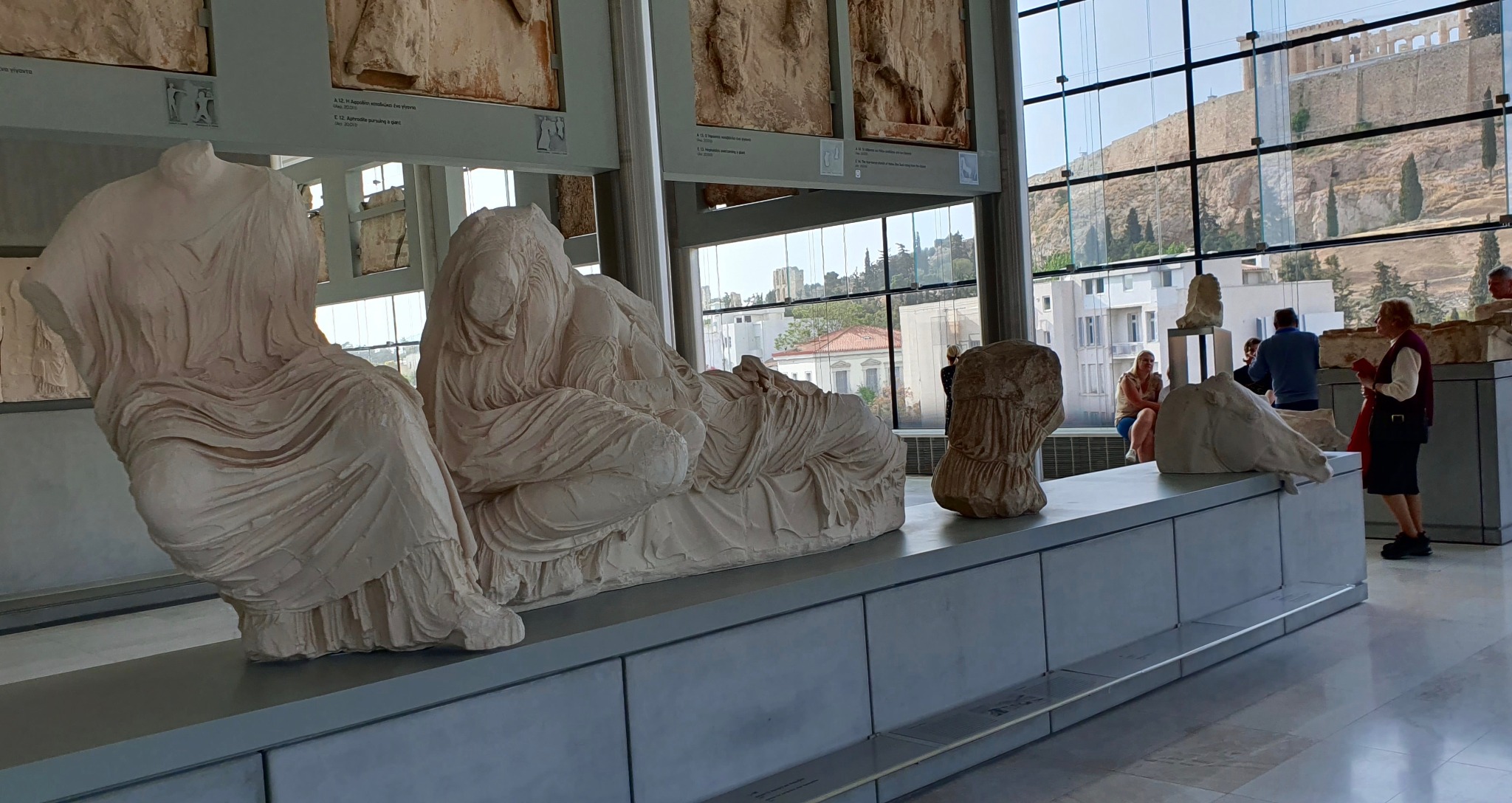
Heritage complicates property, especially when the object is physically part of something else. The British Museum's strongest argument is not really the old one about Greek incapacity to care for the sculptures. That argument has become increasingly difficult to sustain since the opening of the Acropolis Museum in 2009. The museum stands around 300 metres from the Acropolis and contains a gallery specifically designed for the Parthenon sculptures, displaying them in relation to the monument from which they came.
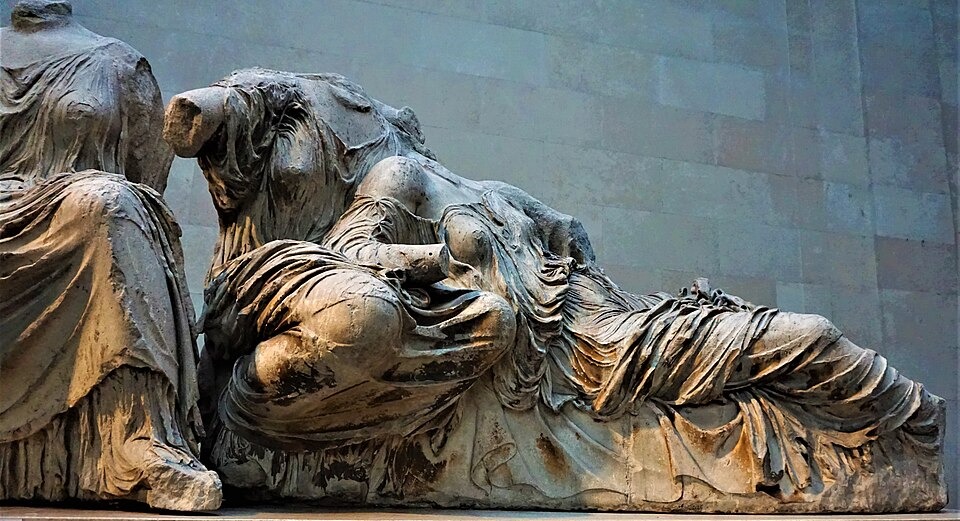
The stronger British case is the idea of the universal museum. In London, the sculptures sit among objects from Egypt, Assyria, Persia, Rome and many other civilisations. The British Museum argues that this context allows visitors to understand ancient Athens as part of world history rather than solely Greek national history. It says there is public benefit in the surviving sculptures being divided between two major museums, each providing a different context, and notes that millions can see the London sculptures without an admission charge.
That argument deserves more respect than it sometimes receives. Museums are among the few places where somebody can walk from one civilisation into another in minutes. The British Museum's extraordinary collection allows comparison on a scale that a museum devoted to one site cannot reproduce. Civilisations were not isolated from one another, and presenting objects internationally can resist the idea that culture fits neatly inside modern national borders.
There is also a danger in allowing twenty-first-century nationalism to claim exclusive ownership of cultures that predate the modern nations invoking them. Classical Athens does not belong intellectually only to modern Greeks any more than Shakespeare belongs only to people holding British passports. Ancient Greek philosophy, politics, architecture, drama and art became part of a shared human inheritance.
But shared inheritance does not necessarily require shared possession. I can believe the Parthenon matters to humanity while also believing that the surviving pieces of the Parthenon make most sense together.
That is the point at which the universal-museum defence becomes less persuasive to me. The British Museum can provide a magnificent context for ancient Greek civilisation, but it cannot provide the Parthenon. Athens can.
The sculptures in London are not simply examples of Classical Greek sculpture that happen to originate from the same country. Their original context still exists. The building survives. The landscape survives. The city survives. The remaining sculptures survive. The Acropolis Museum was deliberately designed to put those surviving pieces into visual and architectural conversation with the monument itself. Greece's argument is therefore one of reunification, not merely repatriation.
That word changes the case because return can imply that an object should go back because somebody else owns it. Reunification asks whether pieces of a work should remain deliberately separated when bringing them together has become possible. Other institutions have already moved in that direction. In 2023, three Parthenon fragments previously held by the Vatican Museums were transferred to the Acropolis Museum, where they were reunited with the monument's surviving sculptural programme.
The British Museum, meanwhile, says constructive discussions with Greece continue and has proposed a new “Parthenon Partnership”. It has considered arrangements involving loans, while the question of ownership remains fundamental to the dispute between the two sides. There is something almost magnificently circular about the problem. “You may borrow the things you say are yours if you first agree that they are ours.” “No.” And so two of Europe's great cultural institutions remain divided by a question of nouns.
The legal difficulty is real. The trustees of the British Museum cannot simply dispose of objects whenever public opinion changes. Its collection is governed by legislation, including the British Museum Act 1963, which substantially restricts the circumstances in which trustees can dispose of objects.
But laws are not weather. Parliament made the legal arrangements. Parliament can change legal arrangements if Britain decides that doing so is justified. The existence of a statute explains why something cannot happen tomorrow; it does not establish that it should never happen.
This is where the argument becomes larger than Elgin. I am not particularly interested in conducting a posthumous criminal trial of a diplomat born in 1766. Elgin behaved within an imperial world whose assumptions about archaeology, ownership and cultural heritage were different from ours. Judging every historical action exclusively by modern standards can become an easy substitute for understanding the world in which it occurred.
Nor should Britain pretend its museums would be improved by emptying them simply because we can apply today's judgement to the past. Collections themselves have histories. Objects acquire new contexts. The British Museum is not merely a warehouse containing things Britain ought to feel guilty about; it is one of the world's great scholarly and public institutions.
Returning the Parthenon sculptures would not require believing otherwise. Indeed, Britain might gain something by doing it voluntarily. Countries often behave strangely around historical possession because returning an object can be made to look like admitting national guilt. The argument becomes a miniature trial of the entire country. If the sculptures leave London, somebody must have lost.
I don't see why. Britain could say something considerably more confident: these sculptures have been preserved, studied and seen here for more than two centuries. Their presence played an important part in European study and understanding of Classical Greek sculpture. They have become part of the history of the British Museum. None of that history disappears if their next chapter takes place in Athens. Objects can have biographies without requiring permanent custody.
There is also a distinction worth making between restitution as punishment and restitution as scholarship. Reuniting the surviving Parthenon sculptures would allow one of antiquity's most important sculptural programmes to be understood more completely. That is not Britain surrendering culture to Greece. It is two countries agreeing that the integrity of the work matters more than the prestige of possessing its pieces.
The universal museum would survive. London would continue to contain more history than anybody could reasonably see before their feet gave up. And Britain would acquire an opportunity to establish a more intelligent principle for future restitution claims. Not everything returns merely because it came from somewhere else.
Instead we ask harder questions. Start with how the object left in the first place. Who authorised it, and under what circumstances? Then look at what has happened since. If it remains part of a surviving monument, what has been lost by separating it? The proposed destination matters too. It needs to be capable of preserving and displaying the object properly. Finally, there is the reason for returning it. What, beyond changing its address, would putting it back actually achieve?
Those questions would not empty museums. They would require museums to think.
The Parthenon case is unusually strong because so many of the answers point in the same direction. The monument survives. Greece has an appropriate museum. Significant portions of the surviving sculpture are already there. The pieces were created as elements of a single architectural programme. Their removal occurred while Greece was under Ottoman rule, and the modern Greek state has formally requested their return for more than forty years. Most importantly, returning them would restore context rather than merely change ownership.
There is a broader principle here about what heritage becomes once it outlives the people who made, bought and governed it. The sculptors who carved the Parthenon could not have imagined Greece, Britain or Turkey in their modern forms. They certainly did not carve the frieze in anticipation of a nineteenth-century parliamentary select committee. The work survived them, their city-state, empires, religions and wars.
At some point an object can become old enough, important enough and embedded deeply enough in collective memory that ordinary ideas of property begin to look inadequate. We already understand this when discussing our own heritage. A medieval cathedral may technically belong to an institution, but nobody seriously believes that institution should be free to dismantle the west front and sell the saints individually because the roof needs doing. The building has acquired obligations around itself.
Ownership has become stewardship.
And stewardship raises a different question from ownership. A museum does not fulfil its purpose merely by possessing an object. It preserves it, studies it, restores it, interprets it and tells people why it matters. Major museums, including the British Museum, possess sophisticated conservation and scientific facilities and use modern imaging and documentation techniques in the study and preservation of their collections. The object is important, but possession of the object is only part of what makes a museum useful.
The same distinction applies to an artefact. The physical thing matters. Its age matters. Its material matters. The hands that made it matter. But people do not travel across countries merely to inspect a quantity of ancient marble. They come because that marble carries a story.
People come for the object and stay for the story.
That story does not disappear if custody changes. London could continue to tell the story of the Parthenon, including the extraordinary two centuries during which its sculptures formed part of the British Museum's collection. Modern casting, three-dimensional recording, imaging and reproduction technologies mean that museums can preserve and present aspects of an object's form and context without claiming that a reproduction is the original.
I have seen the principle work on a much smaller scale at Bolton Museum. It displays a reproduction of the Rosetta Stone rather than the original in the British Museum. On one visit, several people I spoke to had not realised immediately that they were looking at a replica. That did not make the display fraudulent or the original unimportant. The reproduction still gave them a route into the history.
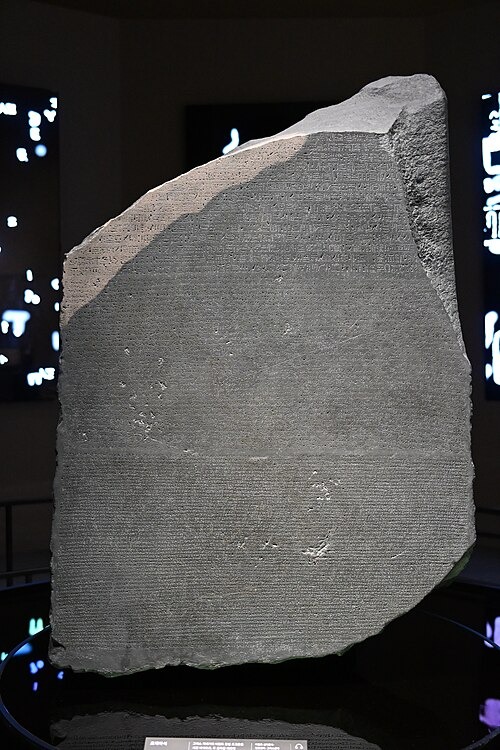
A replica should never pretend to be the original. Nor should we pretend that standing before a reproduction is identical to standing before an object carved more than two thousand years ago. Authenticity matters. Researchers may need access to original material. Visitors value the physical connection created by an original object. Returning the sculptures would therefore involve a genuine loss for London: visitors here would no longer be standing before those particular pieces of fifth-century marble.
In Athens, the originals would not simply be going back to the country where they happened to have been made. Parts of the same monument are already there, alongside the landscape and city that produced it. The Parthenon remains bound to Greek cultural identity without requiring us to pretend that Classical Athens belongs exclusively to modern Greece.
Those ideas can coexist. The Parthenon is part of humanity's inheritance. It is also part of Greece's particular inheritance. Universal significance does not erase local identity any more than local identity prevents the rest of us from finding meaning in it.
Technology changes this considerably. A copy will never be the thing carved two and a half thousand years ago, and nobody should pretend otherwise. But returning the original does not leave London with an empty room and nothing to say. A reconstruction could show the sculptures as they were, while the exhibition around it tells everything that happened afterwards: Elgin, the British Museum, two centuries of study and conservation, the argument with Greece and, perhaps, their eventual return to Athens.
The empty space, or the replica occupying it, would itself become part of the story.
That may be the more useful future for the universal museum. Its authority need not rest solely on how much of the world's material culture it can permanently possess. It can also rest on what it preserves, what it discovers, what it explains and, occasionally, on recognising when good stewardship means allowing an original object to continue its history somewhere else.
The Parthenon deserves that principle. Elgin does not need to have been a thief for returning the sculptures to be the right thing to do. The British Museum has looked after them for more than two centuries, and recognising that does not require keeping them for a third. The circumstances have changed. So has our understanding of what museums are for.
Perhaps Elgin could obtain permission. Perhaps Parliament could buy the sculptures. Perhaps Britain can still produce something approaching a receipt.
But a receipt answers only the question with which we began: whether something was bought.
It does not necessarily answer the harder one.
Whether buying something that belongs to history gives you the right to keep it forever.

Post a comment