Sir Jim Ratcliffe: The Businessman, the Club and the Controversies
Sir Jim Ratcliffe made his fortune in chemicals. His investment in Manchester United has brought redundancies, arguments over ticket prices and plans for a new stadium. Whether the changes will produce a better football club is proving harder to establish.
By R. D. Kerr
Manchester United have been rebuilding for so long that supporters could be forgiven for wondering when the building work might finish. Managers have come and gone, millions have been spent on players, and every fresh start seems to bring another appeal towards patience.
Sir Jim Ratcliffe arrived in December 2023, when there was precious little of it left.
Ratcliffe had made his money in an industry rather less forgiving of sentiment. Chemical plants cost fortunes to operate; energy prices can determine whether production stays feasible; and a poor investment cannot be rescued by promising supporters a better season next year.
There were obvious attractions in applying some of that discipline to United. The club had spent heavily without producing consistent results, while its commercial success had become increasingly difficult to reconcile with what happened on the pitch.
The question was how far Ratcliffe intended to take it.
Born in Failsworth, Greater Manchester, in 1952, he studied chemical engineering before beginning a career in industry. In 1998, he founded INEOS, building the company through acquisitions into an international business spanning chemicals, energy and related operations.
Most people encounter its products without knowing it. Plastics, industrial materials and the components used in everyday manufacturing rarely attract much attention unless something goes wrong. Nobody grows up dreaming of following a polymer production line, but plenty of the things we take for granted begin somewhere along one.
Ratcliffe built his reputation on buying industrial assets and making them profitable. Over time, his interests extended into sport, with INEOS becoming involved in cycling, sailing and Formula One.
Ratcliffe had followed United since childhood. Old Trafford was close to home, although buying into the club would prove rather more complicated than supporting it.
The Glazers kept their majority stake when Ratcliffe bought into United in December 2023, but responsibility for football operations passed to him. His name was increasingly attached to the decisions coming out of Old Trafford.
There was no shortage of work waiting. United had spent fortunes on players without finding a settled team, and managers had come and gone with little to show for it. Even the club's considerable commercial income had failed to keep its finances out of trouble.
Ratcliffe's first changes, however, were not on the pitch. They were in the offices.
United reviewed its operating costs, reorganised departments and reduced approximately 250 jobs. Proposals affecting up to 200 more positions followed in 2025. The club argued that reducing expenditure would help provide the resources needed to compete, as BBC Sport reported.
Ratcliffe was less concerned about defending the contracts he had inherited. When the BBC questioned him in March 2025, he criticised the sums paid to certain players and the lack of results to justify them. He also stood by the job cuts.
It was difficult to argue that United had spent wisely. Supporters had watched successive managers inherit costly squads, struggle to make them work, and eventually leave, only for the next manager to start again.
But the employees who lost their jobs were not the ones who had negotiated those transfer fees.

During the 2024–25 season, some match-day tickets rose to £66, with concessions removed from the affected seats. The decision came while redundancies were already attracting criticism. BBC Sport covered the ticket-price changes.
Protests followed outside Old Trafford. Demonstrators criticised the Glazer family and Ratcliffe, while the supporters’ group The 1958 also challenged the design of the proposed new stadium.
The club’s financial results eventually presented a clearer picture of what the restructuring was achieving.
In September 2026, United reported annual revenue of £677.6 million for the year ending 30 June. Operating profit reached £22.6 million, against an operating loss of £18.4 million the previous year.
Staffing reductions and other savings contributed to the improvement, alongside stronger Premier League performance. Adjusted earnings before interest, tax, depreciation and amortisation also rose.
United nevertheless finished the financial year with a net loss of £43 million. The previous year’s loss had been £33 million.
Operating costs were coming down, although financing costs and other expenses continued to weigh on the business. The redundancies had helped, but United’s financial problems were not going to disappear in a single year.
The figures were published in Manchester United’s September 2026 filing with the US Securities and Exchange Commission,
In March 2025, United unveiled plans for a new 100,000-seat ground at Old Trafford, surrounded by a larger regeneration scheme. The illustrations showed an enormous new stadium and a transformed district around it.
Architectural drawings are rather good at making the difficult parts disappear. Roads are clear, public spaces are immaculate, and nobody appears to be looking for somewhere to park.
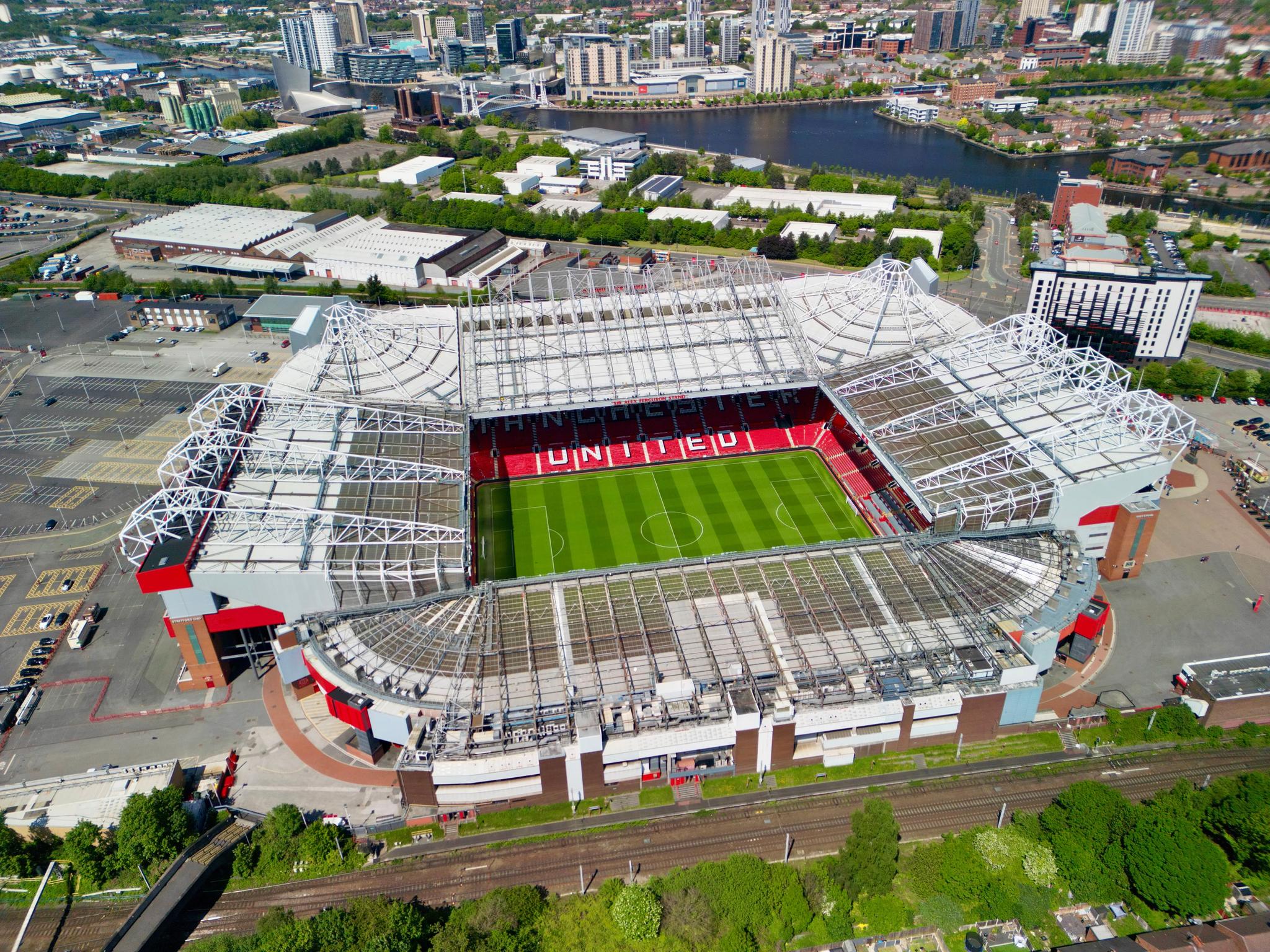
Sky Sports published his subsequent statementThe practical work was already underway. By 2026, United said it had secured most of the land required for the development, including a 25-acre site roughly 350 metres north-west of the existing stadium, according to the club’s announcement.
United had already spent £63.5 million on freehold property associated with the proposed stadium by June 2026, according to its annual report.
Land purchases were only the beginning. A ground capable of holding 100,000 spectators would place substantial demands on transport and the surrounding infrastructure, with businesses and residential neighbourhoods already occupying much of the area.
Who would meet those costs, and how the work would be coordinated, remained pending questions.
Ratcliffe had spent his career overseeing major industrial investments. This one would also involve local authorities, transport providers and people whose interest in the project had little to do with the club’s balance sheet.
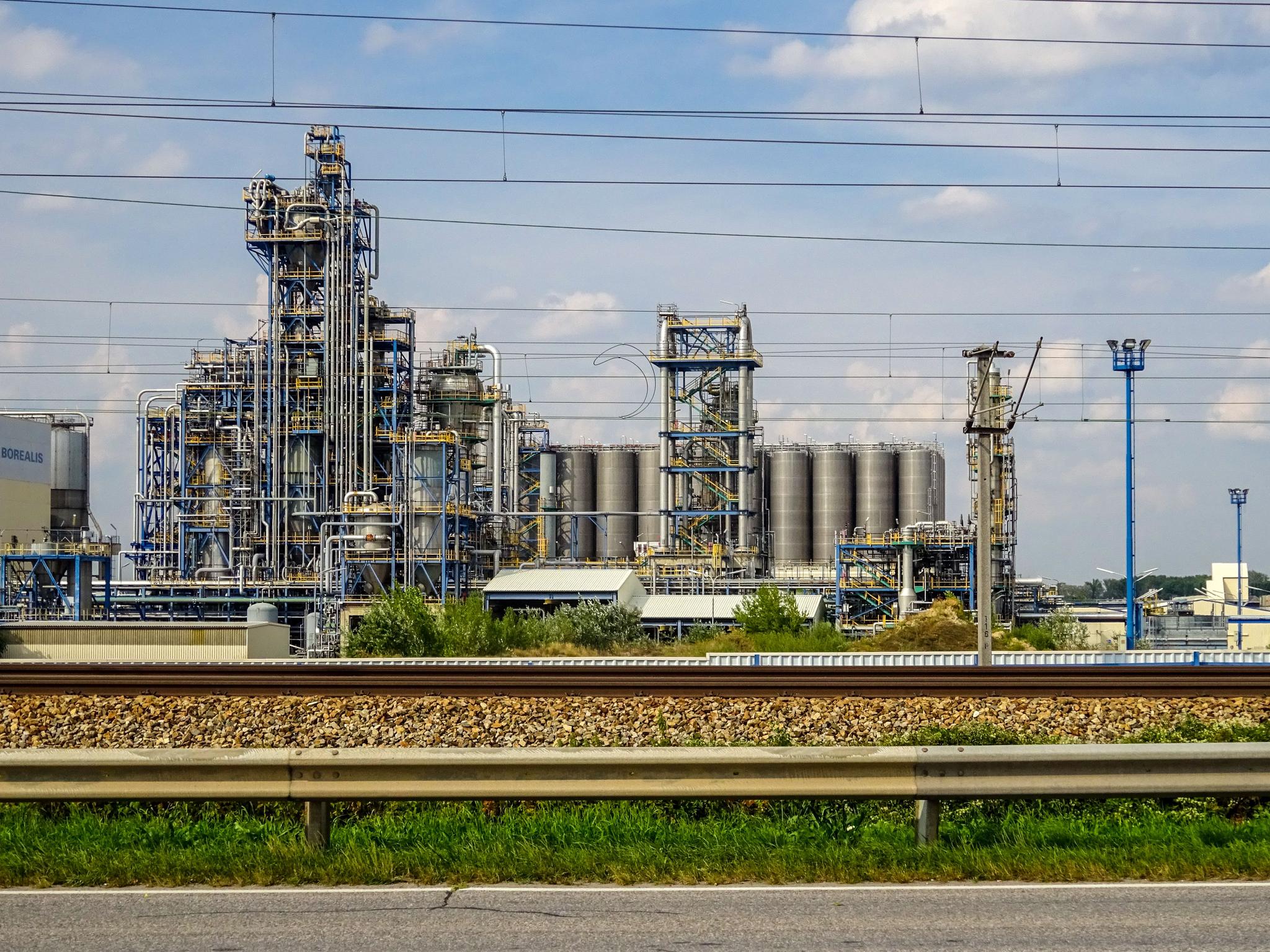
A €2.2 billion pre-tax loss for 2025 was hardly the result INEOS Industries wanted. Its energy business had performed relatively well, but its chemicals and automotive businesses were struggling.
The figures appeared in the company’s accounts, filed at Companies House, and were covered by the Financial Times in October 2026.
For chemical manufacturers, energy is not simply another overhead. Production can require enormous amounts of power, and European businesses have faced competition from producers operating with substantially lower costs.
Three INEOS chemical plants in Hull had their operations suspended in September 2026, with the company blaming high energy costs. Ratcliffe had been making much the same complaint about European manufacturing for years. Energy prices were a particular grievance, although he also believed regulation was making it harder for the industry to compete. Reuters covered the Hull decision.
The effects of losing industrial production can be difficult to reverse. Equipment is sold, workers move on, and suppliers find themselves without customers. A factory does not necessarily reopen because energy prices improve a few years later.
Ratcliffe’s arguments about manufacturing were familiar territory for an industrialist. His comments on immigration in February 2026 caused a different kind of controversy.
During an interview with Sky News, he claimed that immigrants had colonised Britain and used inaccurate population figures to support his argument. Sky News reported the remarks and the political reaction.
The comments drew criticism from politicians, football supporters and anti-racism campaigners. Ratcliffe subsequently apologised for his choice of language, admitting the offence and concern it had caused, while continuing to argue that immigration policy should be discussed alongside employment, economic growth and skills.Sky Sports published his subsequent statement.
The Football Association examined the remarks and decided not to bring a charge. It reminded him of his responsibilities as a participant in English football, according to BBC Sport.
Ratcliffe had spoken previously about the hostility surrounding United’s ownership. In his March 2025 BBC interview, he acknowledged that sustained abuse of the kind directed at the Glazers might eventually persuade him to leave.
The possibility of an owner walking away was one thing. Supporters were more concerned with whether the team was finally going somewhere.
Michael Carrick guided United to third place in the Premier League in 2025–26, securing Champions League qualification after the previous season’s fifteenth-place finish. His appointment was extended through 2028.
United’s financial release confirmed the league finish, and the club announced Carrick’s new agreement.
The improvement did not carry smoothly into the following season.
On 10 October 2026, Tottenham drew 1–1 at Old Trafford despite playing part of the match with ten men. United conceded a late equaliser and had collected only six points from their opening six league fixtures, their poorest start to a top-flight campaign since 1986. Premier League’s official match commentary records the details of the match.
Ratcliffe could hardly be blamed for every misplaced pass, and he was not choosing the starting eleven. But football operations were his responsibility. The people judging his work would not restrict themselves to operating profit, recruitment structures, or savings from reducing staff.
They would look at the league table.
There had been changes throughout the club, some of them necessary, others deeply unpopular. Financial conditions had improved in certain respects without removing the losses. The stadium remained an ambitious proposal, with major questions still to be answered.
Ownership has always been temporary from a supporter’s perspective. Chairmen arrive, managers depart, and players eventually move on. The club is still there on Saturday, along with the people who have spent years following it through the good seasons and the dreadful ones.
Ratcliffe understood what Manchester United was worth.
Whether he could make it successful again was what mattered most to them.
Post a comment