
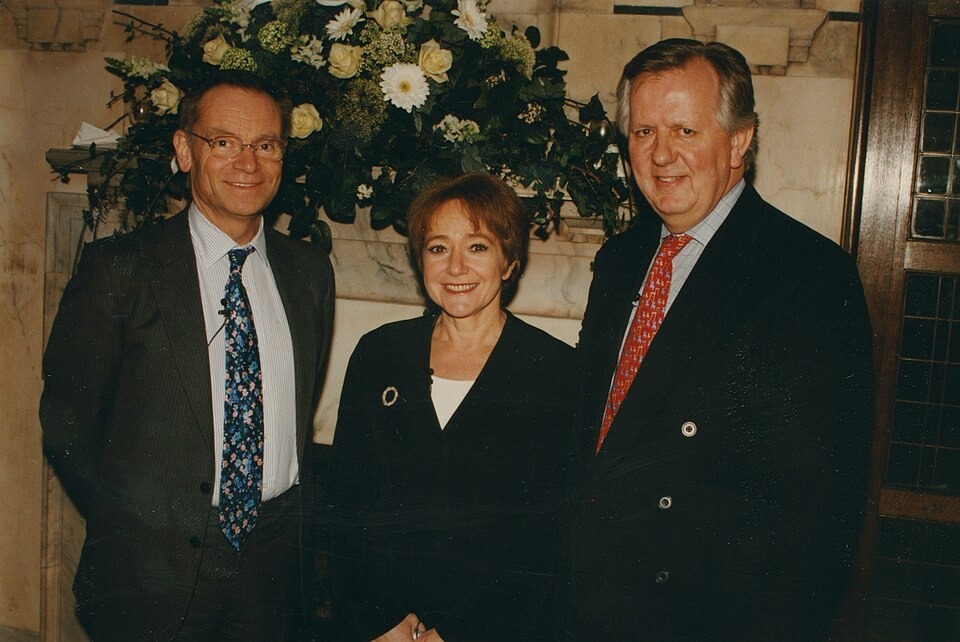
Jeffrey Archer: A Life That Declined to Follow the Plot
Jeffrey Archer sold more than 300 million books, became a prominent Conservative politician and spent two years in prison after a conviction for perjury and perverting the course of justice. His literary success was extraordinary. His public conduct was considerably less distinguished.
By R. D. Kerr
Jeffrey Archer spent fifty years constructing improbable stories. He might have appreciated the timing of his own final chapter, although even he would probably have considered it a little obvious.
Archer's final novel, Adam & Eve, was due to be published on 6 October 2026. He died at home the previous day, aged 86. According to his publisher, he had been writing shortly before his death.
Archer had been a Conservative MP, a prominent party fundraiser, a member of the House of Lords and one of Britain’s most commercially successful novelists. He had also served a prison sentence for lying under oath and interfering with the administration of justice.
Born in London on 15 April 1940, Archer grew up in Somerset. He entered Parliament in December 1969 as Conservative MP for Louth in Lincolnshire, aged twenty-nine.
By 1974, Archer was in serious financial trouble. His investment in Aquablast, a Canadian company, had gone badly wrong, leaving him with substantial debts. The company collapsed amid fraud, and three directors eventually went to prison. Archer was among those who lost money.
He left Parliament that year, aged thirty-four, needing another source of income.
He began writing.
Not a Penny More, Not a Penny Less, published in 1976, concerned four men attempting to recover money lost to a fraudster. Archer had found a subject with which he was rather more familiar than most first-time novelists.
The book established how he would sustain his career. Archer wrote for readers who wanted the story to keep moving. His characters pursued wealth, power and revenge, frequently discovering that somebody else had anticipated their plans.
He was particularly fond of reversals. A bright scheme would collapse, an apparent defeat would conceal an opportunity, and a chapter would end just as the reader expected an explanation. His prose rarely troubled itself with literary ornament.
Critics sometimes complained about the coincidences and the elaborate machinery required to produce his plots. Readers were generally more interested in finding out what happened next.
Kane and Abel, published in 1979, brought him international success. Its story of two men from very different backgrounds, whose lives became entangled through rivalry and ambition, established him as a major commercial novelist.
His books eventually sold more than 300 million copies worldwide. It was a remarkable achievement. Archer understood his audience, and his ability to sustain a long narrative was considerable.
His literary success also provided the money and connections for a return to politics. In 1985, Margaret Thatcher’s Conservative Party appointed him deputy chairman. Archer had become a prominent fundraiser, capable of attracting attention and support well beyond the usual political circles.
The appointment lasted little more than a year. In 1986, allegations emerged concerning his dealings with Monica Coghlan, a sex worker. Archer resigned.
The following year, he sued the Daily Star over allegations that he had paid Coghlan for sex. He denied the allegation and won £500,000 in libel damages.
The proceedings attracted enormous publicity. Archer emerged from the High Court with his account apparently vindicated and a major financial award.
Coghlan had described receiving £2,000 from an associate of Archer at London’s Victoria Station. Archer maintained that the payment had been intended to help her escape press attention.
The judge’s summing-up became notorious for its language about Archer’s wife, Mary, and the suggestion that a man married to such a woman would have little reason to seek sex elsewhere. Mary Archer was praised for her elegance and respectability. Coghlan’s credibility was considered against that background.
It was an extraordinary basis for inviting a jury to consider evidence.
The verdict stood for more than a decade. Archer continued his political activities and, in 1991, organised the Simple Truth appeal for Kurdish refugees fleeing persecution in Iraq.
The campaign included a concert at Wembley featuring major performers and attracted considerable public attention. Archer subsequently announced that approximately £57 million had been raised. The figure became controversial when questions emerged about how much of the money could be accounted for.
Of the money Archer claimed to have raised, some £31.5 million was attributed to foreign governments. Where had it come from? That was among the questions facing KPMG, the accountants, when the British Red Cross asked them to investigate the appeal in 2001. The documentation needed to substantiate those contributions was missing.
Archer told investigators that he could not remember the breakdown of those contributions. KPMG criticised the lack of clarity in statements announcing the appeal’s success.
The investigation found no evidence that charitable funds had been misappropriated. The concern was the reliability of the announced fundraising total, not a proven theft of donations. The Guardian's account of the investigation detailed the questions surrounding those figures.
Archer became Lord Archer of Weston-Super-Mare in 1992. In 1994, the Department of Trade and Industry investigated share dealings surrounding the takeover of Anglia Television.
The Department of Trade and Industry examined transactions surrounding MAI’s takeover of the company. Mary Archer was a non-executive director of Anglia at the time.
The authorities ultimately decided against prosecution. Archer denied wrongdoing, and no further action was taken. The decision was reported by United Press International in July 1994.
By the late 1990s, Archer was preparing for another political opportunity. He had been selected as the Conservative candidate for the first election for Mayor of London.
In November 1999, however, allegations emerged that evidence used in his 1987 libel victory had been fabricated. Archer withdrew from the mayoral contest.
The affair would now return to court, with rather different consequences.
Investigators examined the evidence Archer had relied upon to defeat the Daily Star. Among the central issues was an alibi supplied by his former friend Ted Francis. Archer had procured an account of his whereabouts that he knew to be false.
There was also the matter of his diaries. Archer had provided his former secretary, Angela Peppiatt, with a blank diary for 1986 and instructed her to enter appointments into it. The document was subsequently passed to his solicitors as evidence, while an existing office diary had not been made public.
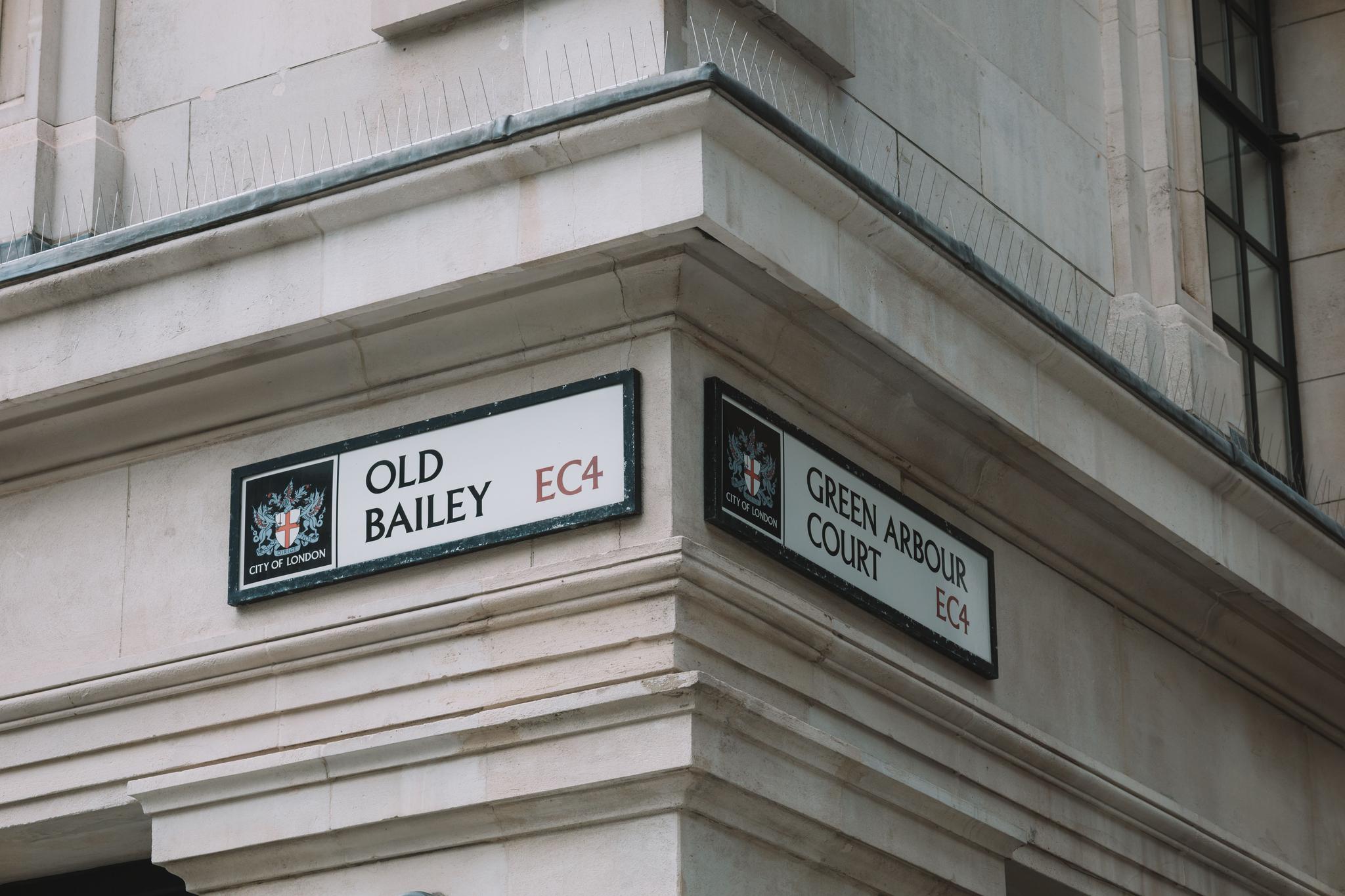
Archer's account of the documents did not withstand scrutiny. At the Old Bailey in July 2001, he was convicted of perjury and perverting the course of justice, and sentenced to four years in prison.
The trial judge, Mr Justice Potts, regarded the perjury as exceptionally serious. Archer had used false evidence in a legal action that resulted in a £500,000 damages award. His conduct went well beyond denying an embarrassing allegation.
Archer had lied about the documents during the preliminary proceedings. The deception caught up with him at the Old Bailey in July 2001, when he was convicted of perjury and perverting the course of justice. The judge sentenced him to four years in prison.
Coghlan never saw the verdict.
She had been killed in April 2001 when a stolen car driven by a fleeing robber collided with her vehicle near Huddersfield. The driver subsequently pleaded guilty to her manslaughter. She was fifty years old.
For years, her name had been attached to a scandal in which Archer had appeared to emerge victorious. By the time his dishonesty was established in court, she was dead.
Archer began his sentence at Belmarsh prison in July 2001. He later served time in other establishments, including open prisons where inmates could be permitted temporary release under certain conditions.
His imprisonment attracted almost as much attention as his trial. Archer began recording his experiences, producing the diaries later published as Hell, Purgatory and Heaven.
The books described daily routines, prison staff and fellow inmates. They also created problems with the prison authorities. In October 2002, Archer admitted breaching prison rules by identifying other prisoners and describing their offences in the first volume.
He received a suspended disciplinary punishment involving the loss of prison earnings and canteen purchasing privileges.
There had already been trouble over temporary release. In September 2002, Archer attended a gathering at the home of former Conservative minister Gillian Shephard, even though he was supposed to return directly to prison. The visit breached his release conditions, and he was transferred from an open prison to a more restrictive establishment.
Archer maintained that he had not understood the rules he had broken. The Prison Service took a different view. Both incidents were covered by The Guardian in its account of Archer’s release.
His sentence continued until July 2003, when he was released after serving approximately two years. The diaries had meanwhile become another publishing venture.
Archer’s experience of imprisonment was real enough, but his prospects after release were unusually favourable. He retained considerable wealth, an established publisher and an international readership.
Many of the prisoners whose experiences he described faced a rather less comfortable return to ordinary life.
Archer went back to writing novels. His political career had effectively ended, but his readers had not disappeared.
The continued popularity of his fiction did not erase the conviction, nor did purchasing one of his books necessarily amount to approving of its author.
His marriage to Mary Archer also continued. They had married in 1966 and had two sons.
Mary Archer's own career took her into science rather than politics. She trained as a physical chemist, worked on solar energy and held academic posts before moving into public appointments. She went on to chair Cambridge University Hospitals NHS Foundation Trust and, later, the Science Museum Group. Her career accomplishments were substantial in their own right.
The marriage endured the financial problems, scandals and imprisonment that had accompanied Archer’s public career. What happened within it was a private matter, however much public speculation surrounded the couple.

Archer’s later novels returned to familiar territory. The seven-volume Clifton Chronicles followed families through changing social and historical circumstances. The William Warwick books explored crime, ambition and the institutions surrounding both.
He continued publishing well into his eighties. Kate Elton, his editor at HarperCollins, recalled a writer who remained closely involved in revisions and who worked through a demanding daily routine. Archer generally divided his writing day into four two-hour sessions, frequently producing manuscripts by hand.
He took the business of writing seriously. The success of his books was not accidental. He knew how to develop a plot, sustain suspense and persuade readers to continue to the next chapter.
Whether the result qualified as great literature remained a matter of taste; as commercial storytelling, it had proved extraordinarily effective.
Archer retired from the House of Lords in July 2024.
His last novel, Adam & Eve, returned to the historical settings and intersecting lives which had served him throughout his career. The story begins with two children born on Armistice Day in 1918. One is the daughter of an earl; the other is the son of a shepherd. Their lives unfold against the backdrop of the years leading up to the Second World War.
Archer later explained that he had found it difficult to connect the characters with the historical events he wanted to explore. The manuscript went through more than twenty drafts and eventually reached approximately 150,000 words. He described it as his most satisfying writing experience.
At eighty-six, he had decided that it would be his final novel. Publication was scheduled for 6 October 2026, but Archer died the previous day.
There is something almost suspiciously convenient about the timing, at least from a novelist’s perspective. A final manuscript completed, a publication date approaching and the author departing just before the book reached its readers.
An editor might have questioned the coincidence.
Archer would probably have kept it.
His career leaves a substantial body of popular fiction and a public record that is considerably harder to admire. His books brought him wealth and an international readership. His political career ended in disgrace, and his conviction established that he had deliberately interfered with the administration of justice.
The final novel appeared on schedule.
Its author was no longer there to see it.

Post a comment