
Greater Manchester’s Bee Network: Has the Journey to Work Changed?
Greater Manchester has completed the franchising of its local buses, bringing routes, fares and service standards under greater public control. But the measure of success is not simply who runs the network. It is whether passengers can make the journeys they need.
By R. D. Kerr
Transport authorities have an understandable fondness for figures, timetables and performance reports. Passengers are generally more interested in whether the bus turns up, whether they can make their connection and how late they might be for work. A network can undergo a major reform without the person standing at a bus stop noticing much difference, particularly if the next service is running twenty minutes late.
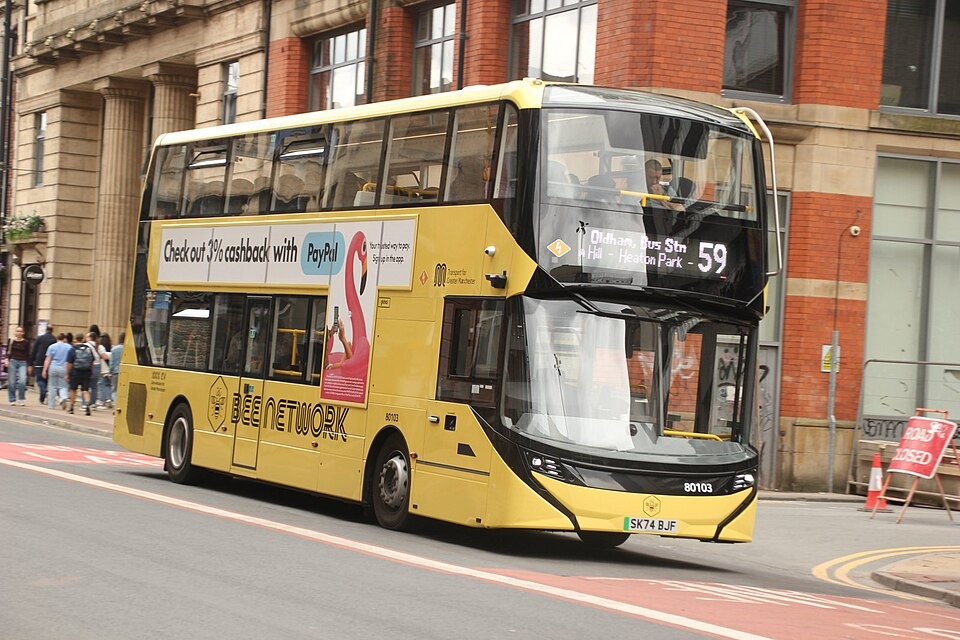
Since January 2025, Transport for Greater Manchester has been responsible for planning bus services across the city-region, including routes, frequencies and fares. Private operators still run the buses under contract.
Franchising began in September 2023 in Bolton, Wigan and parts of Salford, Bury and Manchester. Oldham, Rochdale and other northern areas followed in March 2024, with the remaining services joining in January 2025. Under the previous arrangements, commercial operators largely set their own routes and fares, with public money supporting some services that were unlikely to make a profit.
A year after franchising was completed, buses were keeping to their timetables more often. The Bee Network Committee recorded punctuality of 82.7% for January 2026, an increase of almost eleven percentage points on the previous January’s 71.9%.
By July, punctuality had reached 83.4%. It was the seventh consecutive month that buses had exceeded Transport for Greater Manchester's 80% target.
There is a little generosity in the definition of punctuality. A bus can leave a designated timing point five minutes late and still be recorded as on time, although departing more than a minute early would count against it. Anyone trying to catch a connecting service may find those allowances rather academic.
Bus use has also increased, with 179 million journeys recorded in the year to July 2026. That represents a 3.1% rise, though Transport for Greater Manchester’s September report noted that growth was slowing, with much of the increase attributable to concessionary pass holders.
Greater Manchester’s ten boroughs contain hospitals, colleges, shopping centres and employment sites spread well beyond the city centre. Travelling into Manchester often means using established corridors with frequent departures. A job in an industrial estate or retail park elsewhere in the region can involve changing buses, waiting longer or walking some distance from the nearest stop.
Some of the August timetable changes were aimed at journeys that do not begin or end in Manchester city centre.
In August 2026, additional services were introduced on the 471 between Bury, Bolton and Rochdale, including early-morning, evening and Sunday journeys. Routes 507 and 511 also received timetable adjustments intended to accommodate shift patterns at Logistics North, a major employment site near Bolton.
The 615, connecting Wigan with Middlebrook, was extended to Bolton town centre. Its daytime frequency increased from hourly to half-hourly, with later evening and Sunday services added. For somebody working at Middlebrook, a half-hourly bus provides considerably more flexibility when finishing times are unpredictable.
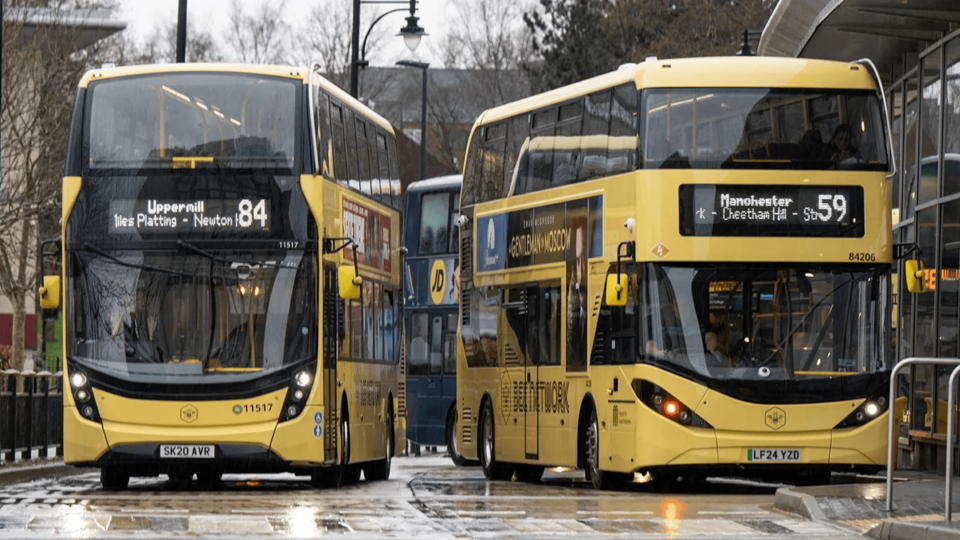
Overnight services have also been introduced on the V1 and 36, connecting Manchester with Leigh and Bolton, and night-bus provision has subsequently been extended to other routes.
The traditional morning and evening rush hours mean relatively little to somebody finishing a hospital shift at midnight or beginning work in a warehouse before dawn. Cleaners, hospitality workers and security staff face similar problems. For them, the last bus of the evening can be considerably more important than the frequency of services at nine in the morning.
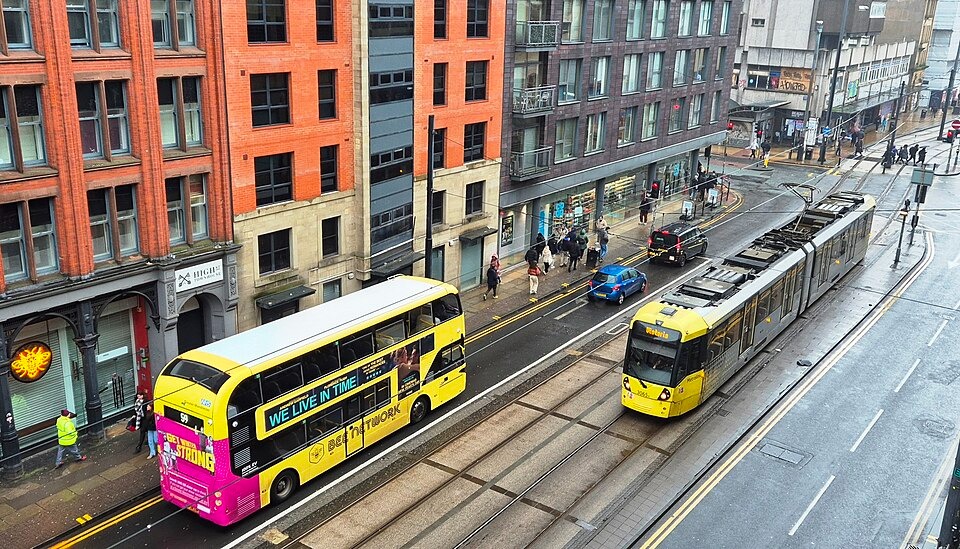
Travelling to work can mean using more than one part of Greater Manchester's transport network. Metrolink reaches several towns and districts, and local trains connect places further afield. For passengers whose workplaces are some distance from a tram stop or railway station, a bus may still be needed to complete the journey.
A missed connection on some of Greater Manchester’s less frequent routes can leave passengers waiting another half hour for a bus. Depending on the stop, they may have little shelter and no useful information about when the service is expected. For somebody travelling to work, that delay can throw out the rest of the journey.
Local rail is due to become more closely integrated with the Bee Network from December 2026. The first phase is planned to include the Manchester Piccadilly routes to Glossop, Hadfield and Rose Hill Marple, together with the Manchester Victoria to Stalybridge line. Contactless payment at an initial group of stations and improvements to passenger information form part of the proposals.
A passenger whose delayed train causes them to miss the last convenient bus home is unlikely to be especially interested in which organisation was responsible for which part of the timetable.
A journey planner might suggest a simple change of buses without showing how difficult it could be for someone with reduced mobility. The connecting stop may be some distance away, with stairs or uneven pavements along the route. Passengers who need assistance must also be able to find out whether it will be available before setting off.
The Confederation of Passenger Transport has questioned whether Greater Manchester's franchising model could be afforded elsewhere. In July 2026, its chief executive, Graham Vidler, cited £134 million spent establishing the system. The organisation, which represents bus and coach operators, also put annual net expenditure on buses at £227 million.
Vidler recognised that more people were using the buses and that punctuality had improved. He remained concerned about congestion, something the change in management cannot resolve on its own. Greater Manchester's roads were carrying around 3% more traffic than in 2019, according to the authority's July 2026 performance report.
Running buses where passenger numbers are low costs money, but withdrawing them can leave communities with few alternatives. A lightly used service may be the only practical way for someone to get to work, a hospital, or the shops. Greater Manchester must decide how far public funding should support those journeys while passengers elsewhere are asking for more frequent buses and lower fares.
Transport for Greater Manchester has been introducing technology that gives buses priority at traffic lights. By July, it had been installed at 280 junctions, allowing signals to respond to approaching buses.
Punctuality also varies across Greater Manchester. All three franchising areas exceeded the 80% target in July 2026. However, the authority continued to identify difficulties in the second area, covering Oldham, Rochdale and parts of Bury, Salford and north Manchester.
July's figures came with a seasonal advantage: the school holidays meant less traffic on the roads. The return of school traffic, followed by autumn weather, would provide a less forgiving test.
More buses are keeping to their timetables, passenger numbers have risen, and some journeys that were previously difficult are now possible. The additional early-morning and evening services matter particularly to people whose working hours fall outside the traditional rush hour.
It remains difficult to establish what has happened to the average journey to work. The available figures do not show how much time commuters have saved or whether connections between outer boroughs have become consistently more dependable.
The yellow buses are now a familiar sight, and the figures suggest they are becoming more dependable. That will be welcome news to passengers who previously had little choice but to allow extra time for missed connections and late arrivals.
The real improvement will come when getting to work no longer requires quite so careful planning for the possibility that the bus won't turn up.

Post a comment