

Bolton Is Spending Millions on Its Town Centre. What Is It Trying to Bring Back?
Work is beginning on £5.18 million of walking and cycling improvements as Bolton reshapes its town centre around fewer traditional shops, new homes and a changing commercial economy.
By R. D. Kerr
Bolton's latest town-centre regeneration work begins with £5.18 million of improvements to its streets and junctions. The walking and cycling scheme, delayed while plans for Crompton Place progressed, is now moving ahead as the council prepares for a town centre with fewer traditional shops.
Bolton Council announced on 5 October that the first phase would focus on Bradshawgate and Great Moor Street, with resurfaced roads, repaved footpaths, improved crossings and segregated cycling routes.
Bolton had the money in 2023. What it didn't have was a clear timetable for Crompton Place, where demolition risked interfering with the roadworks. With the shopping centre now coming down, work on the surrounding streets can finally begin.
The improvements form part of a wider regeneration programme that is changing not only how people travel through Bolton, but what they come into town to do.
Council records confirm that its long-standing strategy includes reducing the traditional retail footprint and concentrating shopping activity around Market Place.
For a town whose centre developed around department stores, national retailers, independent shops and a busy market, that represents a significant change.
Bolton is not simply trying to recreate the shopping streets of previous decades. It is planning for a town centre where people visit, work and live for different reasons.
The immediate changes will be most visible around Great Moor Street and Bradshawgate.
Four junctions are due for upgrade, including those at Great Moor Street and Newport Street, Great Moor Street and Bradshawgate, and Bradshawgate's junction with Churchgate and Deansgate.
The scheme also includes an improved pedestrian crossing near Nelson Square and changes intended to give pedestrians priority at side roads.
Construction is being phased.
The council says initial work on Great Moor Street will run from October to December 2026, concentrating on sections with limited active commercial frontage to reduce disruption during the Christmas trading period.
Great Moor Street will see another round of work from January to April 2027, before the crews move on to Bradshawgate. The council has yet to announce the arrangements for that stage.
Pedestrians and cyclists should find it easier to get around once the work is finished. The changes are also designed to improve access to the transport interchange and connect the surrounding streets with the wider Bee Network.
They also arrive at an important point in Bolton's regeneration programme.
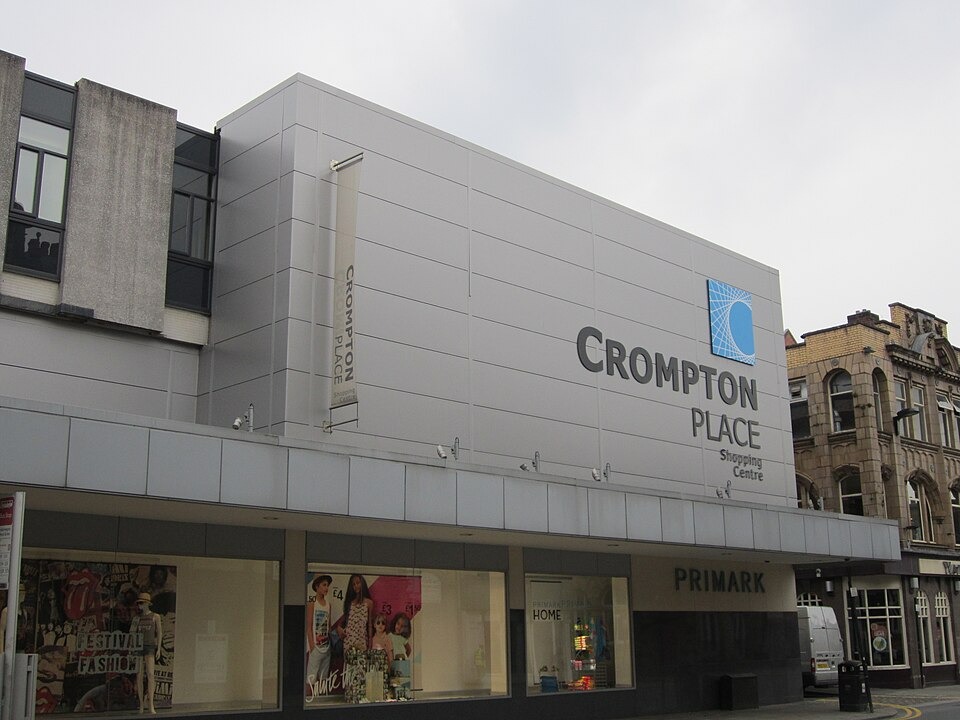
Crompton Place, the former shopping centre adjoining Victoria Square, is being demolished to make way for redevelopment. Bolton Council expects the demolition to be completed in 2027.
The site is central to plans for a new mixed-use development, with Federated Hermes MEPC selected as the council's development partner.
Elsewhere, work has begun at Church Wharf, where local developer Watson Homes is pursuing a new neighbourhood incorporating hundreds of homes and a hotel.
Neither development is intended to restore the shopping centre Bolton once had. The council has been working towards a different model for several years.
Minutes of Bolton Council's Cabinet meeting on 4 November 2024 refer to the town-centre masterplan approved in 2017. Its objectives included reducing the retail footprint, concentrating retail provision around Market Place and redeveloping Crompton Place.
The minutes also identify the importance of creating a route between Crompton Place and Bradshawgate.
In other words, the council's plans involve more than replacing individual buildings. They seek to change how the different parts of the town centre work together.
The challenge is whether that produces a place people have more reason to use.
Bolton's traditional commercial centre developed around a combination of shopping and everyday services. Larger retailers attracted visitors, while independent businesses benefited from passing trade.
Banking, public services and the market provided additional reasons for journeys into town.
That relationship has changed as online shopping has expanded and businesses have reduced their physical presence.
Retail premises also carry costs that can make reopening a vacant unit difficult. Rent, business rates, staffing and repairs all affect whether a prospective tenant can operate profitably.
An empty shop is not necessarily an affordable opportunity for another retailer.
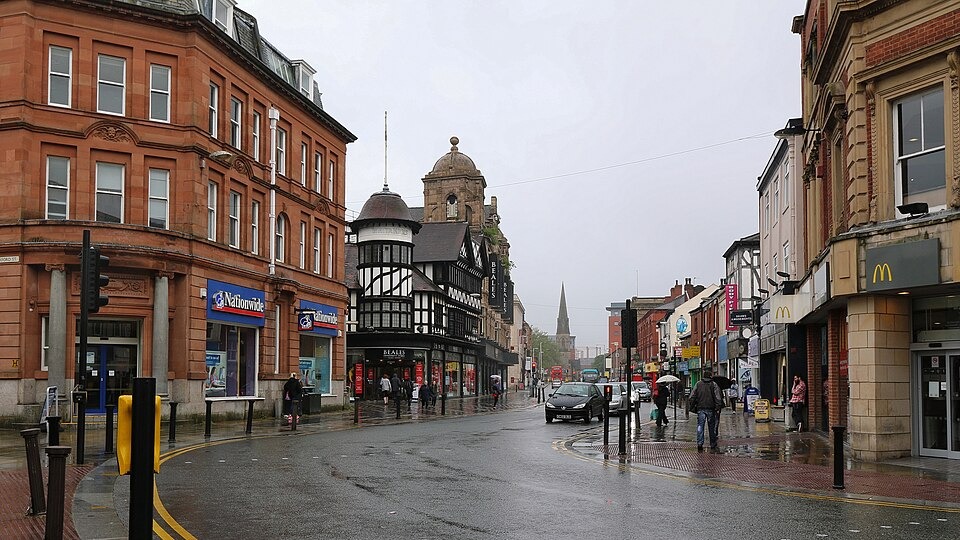
Concentrating shops around Market Place may help the remaining businesses, but it leaves the council with the problem of finding uses for the space elsewhere. Housing is part of its answer. Residents living within walking distance could provide regular customers for shops, cafés and services, rather than relying entirely on people travelling into town.
Restaurants, leisure facilities and hospitality businesses may attract visitors at different times, while offices and other workplaces can bring activity during the week.
Church Wharf illustrates that approach.
The council's regeneration plans envisage hundreds of new homes alongside hotel accommodation and other uses, creating a neighbourhood rather than another shopping destination.
But replacing retail with housing or hospitality does not automatically improve a town centre.
A place dominated by evening entertainment serves different needs from one organised around daytime shopping. New homes may support existing businesses, but the spending generated will depend upon the people living there and the services available.
For Bolton, the question is whether the different uses can support one another.
That matters when considering the latest transport investment.
Better pavements, crossings and cycling routes may make it easier to move between shopping streets, businesses and transport connections.
They may also improve the experience of people already visiting.
The latest national figures suggest that attracting people onto shopping streets remains difficult.
National retail figures underline the wider difficulty.
According to figures published by the British Retail Consortium and Sensormatic on 9 October, UK retail footfall fell by 2.9 per cent in September compared with the same period last year.
High streets recorded a 3 per cent decline, shopping centres a 3.5 per cent fall and retail parks a smaller reduction of 1.7 per cent.
The figures measure visitor traffic, not retail sales or shop vacancies. They also describe national conditions rather than Bolton's individual performance.
They cannot establish whether Bolton town centre is attracting more or fewer visitors.
That would require comparable local data.
The council has secured £5.18 million for the transport improvements, but the amount spent will tell us little about whether the scheme has worked. That will depend on what changes once the construction crews have gone.
If the intention is to improve accessibility, the completed scheme can be assessed through its crossings, pedestrian routes and cycling facilities.
If it is also intended to support the town-centre economy, the relevant measures become broader: visitor numbers, occupancy of commercial premises, business activity, and the use of surrounding streets.
Those changes may take longer to establish and will be affected by circumstances beyond the council's control.
There is also the immediate question of disruption.
Roadworks can affect access, deliveries and customer movements. Bolton Council says the construction programme has been arranged in phases to minimise those effects, including during the Christmas trading period.
Whether those arrangements work for businesses will become clearer as construction progresses.
The wider regeneration programme presents similar questions.
Crompton Place's demolition is a significant step towards redevelopment, but demolition is not the same as a completed commercial destination.
Church Wharf's new homes may eventually increase the number of people using the town centre, but the economic effects will depend upon delivery and occupation.
Bolton's strategy acknowledges that the town centre is unlikely to return to the retail model around which it developed.
That need not be a failure. A smaller shopping area, supported by housing, employment, leisure, and public services, could offer a viable alternative.
But the new town centre will still have to meet the needs of people who rely upon it for ordinary shopping and services.
The latest improvements should make parts of Bolton easier to travel through.
The longer-term test is whether there will be more reasons to stop.

Post a comment